Croatia Marks Vukovar’s 1991 Siege Anniversary Amid Demand for Serbia’s Cooperation on Missing Persons
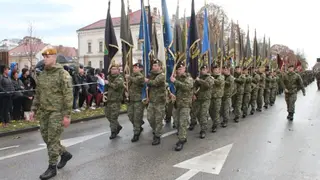
Tens of thousands gathered in Vukovar for the annual Remembrance Procession to honor victims of the 1991 siege during the Croatian War of Independence, with Croatian officials urging Serbia’s new government to provide information on over 300 people still missing from the conflict. The event highlighted the enduring trauma of the siege, during which more than 1,000 hospital staff were killed, including 182 at the Ovcara farm. The procession included participants from Croatia, Bosnia and Herzegovina, and other countries, with top officials including President Zoran Milanovic and Prime Minister Andrej Plenkovic attending.
On November 18, 2026, tens of thousands gathered in Vukovar, eastern Croatia, for the annual Remembrance Procession marking the 1991 siege during the Croatian War of Independence. The event honored over 1,000 hospital staff who died during the three-month artillery assault, including 182 killed at the Ovcara farm on November 20, 1991. The city, once nearly destroyed by the Yugoslav People’s Army (JNA), was rebuilt but remains a symbol of national resilience. This year, the procession was led by surviving hospital workers and included participants from Croatia, Bosnia and Herzegovina, and other countries, with high-level officials such as President Zoran Milanovic, Prime Minister Andrej Plenkovic, and Parliament Speaker Gordan Jandrokovic in attendance. Croatia continues to seek answers on 1,725 people still missing from the 1991–1995 conflict, with over 300 unaccounted for in Vukovar alone. The government, through Plenkovic and Defence Minister Ivan Anusic, has made clear that Serbia’s cooperation—particularly in providing documentation and facilitating access to remains—is a non-negotiable condition for Serbia’s EU accession. The new Serbian administration is now under pressure to respond, though no formal commitments have yet been made. The unresolved issue of missing persons remains a central obstacle to regional reconciliation and EU integration.
The commemoration in Vukovar underscores the enduring emotional and political weight of unresolved wartime trauma in the Western Balkans. For Croatia, the demand for transparency on missing persons is not only a moral imperative but a strategic lever in EU diplomacy, potentially influencing Serbia’s and Montenegro’s accession timelines. The event may reinforce national unity in Croatia while deepening regional divisions if Serbia fails to respond substantively. Comparable to the role of the Srebrenica genocide in shaping Bosnia’s post-war identity, Vukovar’s memory could continue to influence regional politics, especially as EU membership remains a key goal for several Balkan states. The international community may be prompted to re-engage with transitional justice mechanisms, though past efforts have yielded limited results. What may follow is increased pressure on Serbia’s new government to act, possibly through bilateral talks or EU mediation. The coming months will be critical in determining whether this moment becomes a catalyst for progress—or another instance of stalled reconciliation.