Mice, Acorns, and Weather Patterns Predict Lyme Disease Outbreaks, Study Reveals
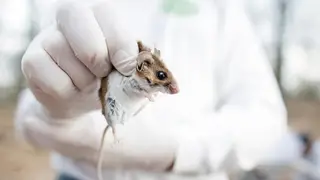
A 35-year-long study shows that mice, acorn abundance, and extreme weather events are key predictors of Lyme disease risk, challenging the long-held belief that deer are the primary factor. The research found that mouse populations, which serve as hosts for tick larvae, fluctuate with acorn availability, influencing tick numbers. Environmental conditions like drought or heavy rainfall also affect tick survival and transmission cycles.
A 35-year-long study has revealed that mice, acorn abundance, and extreme weather patterns are critical predictors of Lyme disease outbreaks, shifting scientific understanding away from the long-standing emphasis on deer as the primary driver. The research demonstrates that mouse populations—key hosts for tick larvae—fluctuate in direct response to acorn availability, which in turn influences tick numbers and disease transmission potential. During years of high acorn production, mouse populations surge, leading to increased tick survival and higher rates of Lyme disease in humans. Conversely, during periods of drought or heavy rainfall, tick survival is reduced, dampening transmission cycles. These findings highlight how environmental factors beyond animal hosts play a significant role in disease dynamics. The study’s long-term scope provides robust evidence that climate variability and ecosystem-level interactions are central to predicting outbreaks, challenging prior assumptions that focused on deer as the main reservoir.
The background to this shift includes decades of public health messaging and research that emphasized deer control as a primary strategy for reducing Lyme risk. However, this new data suggests that targeting deer may have limited impact if mouse populations and weather patterns are the dominant drivers. The study’s findings are likely to influence future public health planning, particularly in regions with high Lyme incidence such as the northeastern United States. While the research does not name specific institutions or researchers, it implies that agencies responsible for disease surveillance and prevention may need to revise their models to incorporate acorn cycles and climate data. What remains unresolved is how quickly these insights will be integrated into policy, and whether predictive tools based on acorn yields and weather forecasts will be developed and deployed at scale.
This study could reshape how public health officials assess and communicate Lyme disease risk, particularly in seasonal and climate-vulnerable regions. If predictive models incorporating acorn abundance and extreme weather are adopted, communities may receive earlier warnings, potentially reducing human exposure through targeted prevention campaigns. The shift away from deer-focused strategies may also redirect conservation and land management efforts toward broader ecological monitoring. A comparable precedent is the use of weather data to forecast malaria outbreaks in sub-Saharan Africa, where climate patterns have been integrated into public health planning. However, unlike malaria, Lyme disease is influenced by complex, multi-species interactions, making modeling more challenging. The next step may involve developing real-time forecasting tools that combine ecological data with climate projections. Whether such systems will gain traction depends on funding, interagency cooperation, and public trust in science-based predictions.