Cell Study Tools May Alter Observed Proteins, Calling Decades of Research Into Question
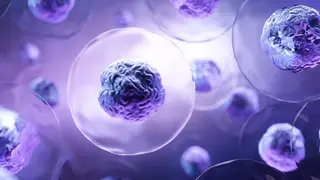
New research reveals that the tools used to study cells may inadvertently alter the very proteins scientists aim to observe, challenging long-standing assumptions about cell structure. The findings question the reliability of decades of studies on coronin proteins, which were thought to organize the cell’s internal framework. This discovery calls for reevaluation of past cellular biology research.
New research has uncovered that common tools used in cell biology may unintentionally modify the proteins scientists aim to study, raising concerns about the accuracy of decades of cellular research. Specifically, the study highlights that methods used to observe coronin proteins—once believed to play a key role in organizing the cell’s internal structure—may have altered the very proteins under investigation. This revelation challenges long-held assumptions about how these proteins function and how their behavior was interpreted in past experiments. The findings suggest that the tools themselves, such as labeling techniques or fixation methods, might have introduced artifacts that distorted protein structure or activity, leading to potentially misleading conclusions.
The background for this discovery lies in the widespread use of standardized laboratory techniques developed over the past several decades. These methods, while effective for visualization and analysis, were adopted without sufficient scrutiny of their potential to alter biological samples. As a result, much of the foundational knowledge about cellular architecture, particularly concerning the cytoskeleton and its regulatory proteins like coronin, may have been built on data collected using tools that inadvertently changed the system being studied. The scientific community has long relied on these techniques, making their limitations a significant but previously overlooked issue.
While the study does not name specific institutions or researchers, it implicates the broader scientific community that has used these tools across countless studies. The implications are far-reaching, as reevaluating past findings could require revisiting published data, recalibrating experimental protocols, and potentially revising textbooks and educational materials. What remains unresolved is whether the observed alterations are consistent across different cell types or only specific to certain proteins. The next steps likely involve developing new, less invasive tools and establishing validation standards to ensure future research is not compromised by methodological artifacts.
This discovery could reshape how biological research is conducted, particularly in fields reliant on microscopic observation and protein labeling. Scientists, especially those in genetics and cell biology, may need to reassess prior findings, potentially affecting academic publications, grant funding, and the credibility of established models. Laboratories worldwide that have used standard fixation and labeling techniques may face the burden of revalidating past results, which could slow progress in related areas like drug development or disease modeling. A comparable case is the 2010s controversy over irreproducible results in cancer research, which led to widespread calls for methodological transparency and replication. This current finding may trigger a similar wave of scrutiny, prompting journals to demand more detailed methodology disclosures. Institutions may also revise training protocols to emphasize tool limitations. What to watch for next is whether major research bodies will issue guidelines for validating experimental tools, or if new imaging technologies will emerge to minimize interference. The long-term impact could be a more cautious, self-correcting scientific culture—though the pace and extent remain uncertain.