Elon Musk Denies Being 'Maga' and Expresses Regret Over $250 Million in Republican Donations
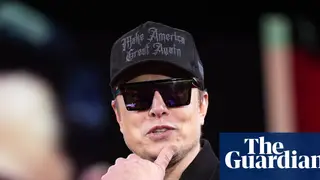
Elon Musk stated he is not a 'Maga' and expressed regret over spending nearly $250 million on Republican candidates during the 2026 midterm elections. Speaking at the New York Times Dealbook summit from China, Musk said he now views his political support as 'pretty foolish' and emphasized that he sees both parties as having positives and negatives. He also criticized Ukraine’s president, praised former Nvidia CEO Jensen Huang, and defended his recent collaboration with AI firm Anthropic.
Elon Musk, the world’s richest person and CEO of SpaceX and Tesla, publicly denied being a “Maga” at the New York Times Dealbook summit in November 2026, despite his prominent alignment with Donald Trump and the Make America Great Again movement since 2024. Speaking via video from China during Trump’s Asia trip, Musk stated he now views his political spending as “pretty foolish,” particularly his nearly $500 million investment in Republican candidates during the 2026 midterm elections—making it the largest non-candidate political expenditure in U.S. history. He acknowledged the spending failed, as most of the candidates he supported lost, and expressed regret, saying he would have spent less if given the chance. Musk had previously declared at a 2024 rally, “I’m not just Maga. I’m dark, gothic Maga,” and served as head of the self-styled “department of government efficiency” (Doge) in Trump’s second administration from January 2025 to June 2025, a role marked by frequent Oval Office appearances and public displays of loyalty, including wearing MAGA-themed hats. His abrupt departure followed a viral post alleging Trump was in the Jeffrey Epstein files, which led to a public rift before a later reconciliation. Musk also criticized Ukrainian President Volodymyr Zelenskyy over access to Starshield satellites, praised former Nvidia CEO Jensen Huang, and defended his recent collaboration with AI firm Anthropic, claiming he had vetted the team thoroughly and found them principled.
The background to Musk’s reversal lies in his rapid political ascension and subsequent disillusionment. His 2024 $250 million donation helped secure Trump’s election, and his 2026 spending spree reflected a belief in Republican dominance and reformist zeal. However, the electoral failure of his endorsed candidates, combined with the fallout from his controversial post, may have triggered his reevaluation. His stated belief that “there are positives and negatives in both” parties marks a significant shift from his earlier unambiguous support for the GOP. The people involved include Musk, Trump, Zelenskyy, and executives at Anthropic and Nvidia. Musk appears to seek credibility and influence beyond partisan loyalty, while Trump may be recalibrating his relationship with a once-loyal ally. What remains unresolved is whether Musk will continue to engage in politics, how his AI partnerships may evolve, and whether his public regret signals a broader retreat from political activism. It is not yet known if he will make future donations or if his influence on policy will diminish.
Musk’s public retreat from his earlier political fervor could signal a broader reckoning among tech billionaires whose political interventions have been seen as disruptive. His $500 million midterm investment, while unprecedented in scale, underscores the risks of using personal wealth to influence elections without electoral accountability. The failure of his endorsed candidates may reinforce concerns that money alone cannot overcome structural political dynamics, potentially discouraging similar high-profile interventions. This could affect political fundraising models, where wealthy individuals may now hesitate to pour vast sums into races without a clear path to influence. The episode also raises questions about the role of private actors in democratic processes—particularly when they hold significant sway over technology infrastructure, as with Starshield, or emerging AI governance, as with Anthropic. A comparable case is the 2016 election, when tech figures like Peter Thiel backed Donald Trump, only to later distance themselves amid shifting political tides. Musk’s pivot may not be a full retreat but a recalibration—suggesting that future influence may be more strategic and less overt. What to watch for is whether Musk’s criticism of Zelenskyy and praise for Huang are part of a broader geopolitical realignment, or if his AI collaborations will become a new front for influence, separate from partisan politics.