CMBLU Secures $7.2 Million Grant for Non-Lithium Battery Project in California
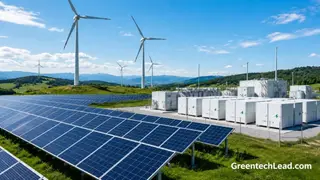
CMBLU Energy and the Imperial Irrigation District received $7.2 million in grant funding from the California Energy Commission for the first phase of the 10 MW/100 MWh Echo Sands Community Resilience project. The project, located at the Pilot Knob Hydropower Plant in Winterhaven, will deploy CMBLU’s non-lithium SolidFlow battery technology. It will serve the Fort Yuma Quechan Indian Tribe and surrounding communities, with development proceeding in two phases.
CMBLU Energy and the Imperial Irrigation District have secured $7.2 million in grant funding from the California Energy Commission for the first phase of the 10 MW/100 MWh Echo Sands Community Resilience project, located at the Pilot Knob Hydropower Plant in Winterhaven, California. The initial phase involves deploying a 1 MW/10 MWh installation using CMBLU’s non-lithium SolidFlow battery technology, which will provide 10 hours of storage at full output. This marks the first phase of a two-part development, with the remaining 9 MW/90 MWh to be added later. The project is designed to serve the Fort Yuma Quechan Indian Tribe and surrounding communities, enhancing local energy resilience. The California Energy Commission approved the grant on November 18, 2026, under its Community Energy Reliability and Resilience Investment programme. Pacific Northwest National Laboratory and the Electric Power Research Institute are supporting the project’s development.
The initiative reflects a growing trend toward decentralized, community-focused energy resilience, particularly in vulnerable or underserved regions. CMBLU’s choice of non-lithium battery technology is significant, as it avoids reliance on scarce or geopolitically sensitive materials like lithium, potentially reducing supply chain risks and environmental impacts. The project builds on prior investments in grid modernization and renewable integration in California, where climate-driven outages and extreme heat have heightened demand for reliable, local power sources. CMBLU and the Imperial Irrigation District aim to demonstrate the viability of alternative battery chemistries at scale, while the Fort Yuma Quechan Tribe seeks greater energy sovereignty. The timeline for the second phase and final project completion remains unspecified, and no details on long-term operational or maintenance plans have been released.
The Echo Sands project could serve as a model for community-driven energy resilience in climate-vulnerable regions, particularly for Indigenous communities and rural areas with limited grid access. By using non-lithium battery technology, the project may help reduce environmental and geopolitical risks associated with lithium mining, potentially influencing future policy and investment in alternative storage solutions. If successful, it may encourage similar public-private partnerships in other states or regions facing similar challenges. Comparable efforts include the U.S. Department of Energy’s Grid Modernization Initiative, which has supported pilot projects in grid resilience and storage. However, the broader impact depends on whether the non-lithium technology proves scalable, cost-effective, and durable over time. What remains to be seen is how this project will influence regulatory frameworks, investor confidence in alternative battery chemistries, and the pace of adoption in other public and tribal energy programs.