Choosing Black Devices Can Save You Hundreds During Black Friday Sales
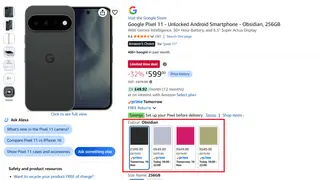
Black Friday deals often offer greater discounts on black-colored tech devices compared to vibrant color options, with examples showing savings of over £200 on certain Pixel 11 models. This pricing trend, observed on platforms like Amazon since 2024, appears to stem from higher production volumes and better sales performance of black models. Consumers are advised to compare color variants before purchasing to maximize savings.
Since at least 2024, a consistent pricing pattern has emerged on Amazon and other major retail platforms: black-colored tech devices, particularly smartphones like the Google Pixel 11 series, are regularly offered at deeper discounts compared to their non-black counterparts. This trend was notably observed in the Pixel 11 lineup, where the Obsidian black variant was priced £50 lower than the standard model, the Pro XL £70 cheaper, and the Pro Fold a striking £210 less—savings that significantly outpace typical Black Friday markdowns. These price differences were documented in real-time during what Amazon referred to as “Black Week,” indicating that the phenomenon is not isolated to a single year but part of an ongoing retail strategy. The data also revealed exceptions, such as the Canyon-colored Pixel 11 Pro 256GB being slightly cheaper than the Obsidian version, though still more expensive than the Fog and Olive variants. The underlying reason appears to be production and sales volume: black devices are produced in greater quantities and sell more reliably, allowing retailers to offer deeper discounts without sacrificing margins. This pricing strategy reflects a broader industry trend where color choices influence both manufacturing scale and consumer demand. The companies involved—Google, Amazon, and brands like Xiaomi—are likely optimizing inventory turnover and profit margins by incentivizing purchases of high-volume models. What remains unclear is whether this pricing disparity is a deliberate tactic or a byproduct of supply chain efficiencies, and whether it will persist beyond Black Friday or expand to other product categories such as laptops or wearables.
This pricing anomaly could influence consumer behavior by encouraging shoppers to prioritize functionality and savings over aesthetics, potentially shifting demand toward neutral colors. While the immediate impact is on individual purchasing decisions—especially during high-traffic sales events like Black Friday—the broader effect may be a subtle reinforcement of monochromatic design preferences in consumer electronics. Retailers may leverage this trend to manage inventory more efficiently, reducing overstock risks for popular color variants. A comparable earlier case is the historical pricing of certain Apple iPhone models, where matte black versions were sometimes discounted more aggressively due to higher production volumes and lower perceived desirability compared to brighter colors. However, unlike that scenario, the current trend appears more systematic and data-driven, possibly rooted in algorithmic pricing models. The long-term implications could include a feedback loop where manufacturers produce more black devices, leading to even greater discounts, which in turn drives more sales—potentially marginalizing color diversity in product offerings. What to watch for next is whether this pattern spreads beyond smartphones to other tech categories, and whether consumer advocacy groups or regulators will scrutinize such pricing strategies as potential forms of hidden discrimination or market manipulation.