Broadway Brings 'It's a Wonderful Life' to Life with Live Radio Play Featuring Andrew Rannells and Megan Hilty
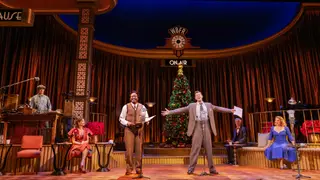
Andrew Rannells, Megan Hilty, Tituss Burgess, Harry Hamlin, and Lisa Rinna star in a live radio play adaptation of the classic holiday film at New York's Broadhurst Theatre. Directed by Jerry Zaks and adapted by Joe Landry, the production recreates a 1940s radio broadcast with live sound effects and holiday carols. The show runs through January 3, 2027, offering audiences a nostalgic, heartwarming experience of George Bailey's story.
It’s a Wonderful Life: A Live Radio Play, adapted by Joe Landry and directed by Jerry Zaks, opened at New York’s Broadhurst Theatre on November 18, 2026, and will run through January 3, 2027. The production features a star-studded cast including Andrew Rannells as George Bailey, Megan Hilty as Mary, Tituss Burgess as Clarence, Harry Hamlin, and Lisa Rinna, all performing in a recreated 1940s radio studio setting. The show blends live Foley effects by Leslie Bloome, holiday carols under music direction by Andy Einhorn, and scenic design by Tony winner Santo Loquasto, creating an immersive auditory and visual experience. The adaptation marks a revival of the 1946 film’s 80th anniversary, reimagining its narrative through a nostalgic, live broadcast format. This theatrical choice reflects a broader trend of reinterpreting classic media for live performance, particularly during the holiday season, when audiences seek emotional resonance and tradition. The decision to stage the production on Broadway—where it joins other seasonal staples—suggests a strategic move by producers to capitalize on both cultural nostalgia and the enduring popularity of the original film.
The creative team, led by Zaks and Landry, aims to deliver a communal, participatory experience that emphasizes storytelling over spectacle. Rannells and Hilty, known for their chemistry and stage presence, bring a familial warmth to the central couple, while Burgess’s portrayal of Clarence adds celestial humor and pathos. Hamlin and Rinna, real-life spouses, contribute authenticity to their dual roles, enhancing the production’s emotional texture. The production’s success may depend on its ability to balance reverence for the source material with fresh theatrical innovation. What remains unresolved is how this adaptation will be received beyond New York—whether it will tour or be adapted for other media. The long-term impact on Broadway’s holiday programming and audience expectations for immersive, nostalgic experiences is yet to be seen.
This production could deepen the cultural relevance of live theater during the holiday season, reinforcing its role as a communal, emotionally resonant alternative to digital entertainment. By reviving a beloved film through a live radio format, it may inspire other adaptations of classic stories that prioritize auditory storytelling and audience participation—potentially influencing how streaming platforms and stage producers approach nostalgia-driven content. The success of this show may encourage more productions to embrace immersive, sensory-rich formats, especially in an era where audiences seek authenticity amid digital saturation. A comparable precedent is the enduring popularity of live readings and staged concerts, such as the annual “A Christmas Carol” adaptations in New York, which similarly blend tradition with theatrical innovation. If this production gains traction, it may signal a broader shift toward experiential theater that values atmosphere and shared presence over spectacle. What to watch for next is whether other classic films will be adapted in similar formats, and how streaming services might respond by offering live broadcast-style content to compete with live stage events.