Euclid Telescope Discovers 15,000 Strong Gravitational Lens Candidates in First Data Release
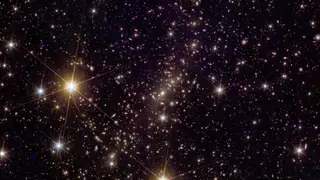
The European Space Agency's Euclid space telescope has identified 15,000 strong gravitational lens candidates in its initial data release, significantly advancing the search for dark matter signatures. These lenses, caused by massive galaxy clusters bending light from distant objects, serve as critical tools for mapping dark matter distribution. The mission's 3D sky mapping aims to unravel the mysteries of dark energy and the large-scale structure of the universe.
In November 2026, the European Space Agency’s Euclid space telescope released its first data set, DR-1 Foundation, revealing 15,000 strong gravitational lens candidates from just 13 months of observations covering nearly 5% of the night sky. Launched in July 2023, Euclid orbits the Sun-Earth Lagrange point L2, approximately 1.5 million kilometers from Earth, where its wide-angle, 600-megapixel camera and near-infrared spectrometer capture visible and infrared light from up to 10 billion sources, extending back to redshift 2—about 3.7 billion years after the Big Bang. The data release, totaling 1.7 million gigabytes, includes 900 million galaxies and 60 million quasars. These lens candidates are formed when massive objects like galaxy clusters or dark matter halos bend light from distant background sources, creating magnified or distorted images. Before Euclid, fewer than 1,000 confirmed strong lenses existed; now, the number of candidates has surged by a factor of 15, with the mission expected to find over 100,000 by the end of its six-year mission. The discovery is significant because strong gravitational lenses allow scientists to map dark matter distribution by measuring total mass, not just visible matter. The work is led by the Euclid Consortium, with key contributions from researchers like Dr. Douglas Scott of the University of British Columbia and doctoral student Hrishabh Srivastava, both part of the collaboration. The ultimate goal is to understand dark matter and dark energy—two phenomena that together make up 95% of the universe yet remain fundamentally mysterious. What remains unresolved is whether these candidates will be confirmed through follow-up observations, and how precisely they will refine models of cosmic structure and dark energy’s role in accelerating the universe’s expansion.
Euclid’s discovery could significantly advance cosmology by providing a vast new dataset for testing theories about dark matter and dark energy, potentially reshaping our understanding of the universe’s large-scale structure. While the immediate beneficiaries are astrophysicists and space agencies, the broader impact may be felt in education, public science engagement, and technology development—especially in data processing and machine learning, which are essential for analyzing Euclid’s massive datasets. The project may also influence future space missions, setting a precedent for large-scale, data-driven astronomy. A comparable earlier case is the Hubble Space Telescope’s deep field images, which revolutionized observational astronomy by revealing the depth and complexity of the cosmos, inspiring both scientific and public interest. Euclid’s work may similarly catalyze new generations of scientists and inform policy decisions on long-term space science funding. However, the real-world impact depends on whether these lens candidates can be validated and used to refine cosmological models. The next phase—confirming the candidates and modeling their gravitational effects—will require coordinated international effort and advanced computational tools. What to watch for is how quickly the scientific community can transition from discovery to interpretation, and whether Euclid’s findings will lead to breakthroughs in theoretical physics or merely refine existing models.