Uranus Reaches Opposition in Taurus, Offering Prime Viewing Opportunity This Thanksgiving
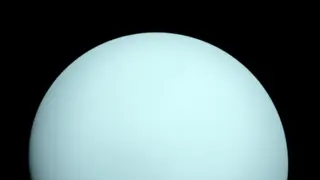
Uranus will reach opposition on November 25, 2026, making it visible in the evening sky near the Hyades and Pleiades star clusters in the constellation Taurus. The planet, currently inbound toward perihelion, will be at its brightest and most accessible for observation. Skywatchers can spot it as a faint blue-green point of light, resembling a distant fuzzy comet or planetary nebula, using low-power telescopes or binoculars.
On November 25, 2026, Uranus will reach opposition in the constellation Taurus, positioned between the Hyades and Pleiades star clusters, marking its most favorable viewing window of the decade. At this time, the planet will shine at magnitude +5.5—just shy of naked-eye visibility under ideal dark-sky conditions—and will be at its closest to Earth, approximately 18.3 AU from the Sun, as it moves toward perihelion in 2050. This opposition occurs on Thanksgiving Eve in the U.S., aligning with a Full Beaver Moon that occulted the Pleiades on November 24, adding celestial drama. The planet’s discovery site in 1781, near the border of Taurus and Gemini, will be revisited in 2033, when Uranus returns to that location. Historically, Uranus was mistaken by William Herschel for a comet due to its faint, fuzzy appearance, but he soon realized it was a distant planet beyond Saturn. Herschel, an amateur astronomer working in Bath, England, made the discovery using a homemade telescope, though his proposed name “George” for the planet was rejected.
The only close-up visit to Uranus to date was by NASA’s Voyager 2 in 1986, which provided the first detailed images of the planet and its moons. Since then, no follow-up mission has been launched, though proposals for a Cassini-style orbiter have been considered, with a launch window potentially opening in the 2040s. The James Webb Space Telescope has since provided high-resolution views of Uranus’s rings and atmosphere. While only five of Uranus’s 29 known moons are visible with amateur telescopes—Titania being the brightest at magnitude +13.9—transits of these moons are rare, occurring only once every 42 years, with the last such event between 2006 and 2009. The next opportunity may arise around 2048. The planet’s extreme axial tilt of 98 degrees means that its poles face Earth nearly directly by 2029, offering a unique vantage for future observation. What remains unresolved is whether a dedicated mission to Uranus will materialize, and when.
The 2026 opposition of Uranus may inspire renewed public interest in planetary science and amateur astronomy, particularly among educators and stargazing communities. With the event coinciding with a major holiday, it could serve as a teachable moment in schools and science outreach programs, potentially boosting engagement with space literacy. The visibility of Uranus—just within reach of keen observers—may encourage more people to invest in binoculars or small telescopes, possibly stimulating modest growth in consumer astronomy equipment sales. Comparable to the 2017 total solar eclipse, which sparked widespread public fascination with astronomy, this event could catalyze temporary spikes in interest in space exploration. However, the broader impact may be more subtle: it could reinforce the public’s awareness of the solar system’s outer planets, which are often overlooked in favor of Mars or Jupiter. While no immediate policy or funding shifts are expected, the event may bolster long-term advocacy for planetary missions. The fact that Voyager 2 remains the only spacecraft to visit Uranus underscores a gap in NASA’s exploration priorities. If public enthusiasm translates into sustained political will, it could influence future mission planning. What to watch for next is whether this moment becomes a catalyst for renewed scientific and public momentum—could a dedicated mission to Uranus gain traction in the coming decade?