Beaver Moon Aligns with Pleiades Star Cluster in November 2026 Sky Event
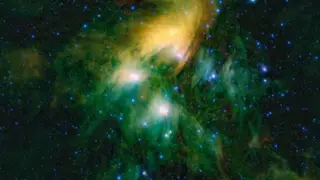
On November 24, 2026, the Beaver Moon will pass near the Pleiades star cluster, also known as the Seven Sisters, in the Taurus constellation. The closest approach will occur just before dawn, with the Moon appearing only 0.9 degrees from the cluster in the western sky. The full Moon phase will peak at 9:53 a.m. EST, but visibility in the U.S. will be best after sunset.
On November 24, 2026, the Beaver Moon—officially the full Moon of November and a Supermoon due to its proximity to Earth—will pass within 0.9 degrees of the Pleiades star cluster (M45) in the Taurus constellation, creating a rare celestial alignment visible just before dawn in the western sky. The Moon’s peak full phase will occur at 9:53 a.m. EST, but optimal viewing in the U.S. will be after sunset, with the closest approach happening hours before sunrise. At a distance of 223,374 miles (359,486 km), this Supermoon will appear larger and brighter than average, though its closest approach to Earth will occur the following day. This event marks the first of three consecutive Supermoons in late 2026, followed by the Cold Moon on December 23 and the Wolf Moon on January 22, 2027. The Pleiades, known as the Seven Sisters, are a prominent open star cluster visible to the naked eye, with five stars—Alcyone, Electra, Atlas, Maia, and Merope—typically discernible without optical aid. The Moon’s passage will temporarily obscure several of these stars for observers across North America. NASA’s Wide-field Infrared Survey Explorer (WISE) and the Cassini spacecraft have previously captured images of the cluster, contributing to public understanding of its structure. The event is being promoted by astronomy outreach platforms like Starlust and referenced by the Farmers’ Almanac, which tracks lunar cycles. No new space missions are involved, but the alignment offers a public engagement opportunity for amateur astronomers and educators. What remains unresolved is the precise visibility of the star occultations across different U.S. regions, which depends on local topography and atmospheric conditions.
The Beaver Moon–Pleiades conjunction may inspire renewed public interest in amateur astronomy, particularly among younger demographics and educators seeking accessible celestial events to teach observational science. Such events often lead to increased engagement with science communication platforms, stargazing apps, and local astronomy clubs, potentially boosting participation in citizen science initiatives. Comparable to the widespread attention generated by the 2017 total solar eclipse in the U.S., this event could catalyze temporary spikes in telescope sales and educational programming. While not directly impacting markets, it may influence media coverage of space topics and encourage investment in public outreach tools. The broader societal effect could be a subtle shift toward greater appreciation for natural phenomena, reinforcing science literacy. However, the impact may be limited to regions with clear skies and minimal light pollution. What to watch for next is whether this event becomes a recurring highlight in annual skywatching calendars, potentially shaping how space agencies and media frame future lunar and stellar alignments.