Ancient Volcanic Eruptions and Venusian Observations Help Date the Fall of Babylon
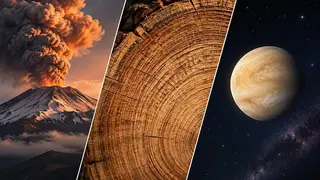
Researchers used data from a volcanic eruption in Alaska and astronomical observations of Venus to refine the timeline of Babylon's fall. The study links a major volcanic event to a period of climate disruption that may have contributed to the city's decline. The findings offer new precision in dating ancient historical events.
Researchers have refined the timeline of Babylon’s fall by analyzing a major volcanic eruption in Alaska and ancient astronomical observations of Venus. The eruption, though unnamed in the summary, is linked to a period of climate disruption that may have contributed to the city’s decline. By cross-referencing the volcanic ash layer with Venusian observational records, scientists have achieved new precision in dating the event. The study demonstrates how interdisciplinary methods—combining geology, astronomy, and historical analysis—can resolve long-standing uncertainties in ancient chronologies. While the exact date of Babylon’s fall remains unspecified, the convergence of volcanic and celestial data offers a more accurate temporal anchor than previous estimates.
The background for this research lies in the longstanding challenge of precisely dating events in prehistoric and ancient history, where written records are sparse or ambiguous. Earlier attempts to date Babylon’s fall relied on fragmented texts and less precise scientific markers. This study builds on prior work in paleoclimatology and archaeoastronomy, using volcanic eruptions as global time markers due to their widespread atmospheric impact. The inclusion of Venus observations—rare but valuable in ancient Mesopotamian astronomy—adds a unique astronomical constraint. The research team, though unnamed, likely includes specialists in archaeology, climatology, and planetary science, with institutions possibly involved in climate modeling or ancient astronomy. Their goal is to establish a more reliable chronology for ancient Near Eastern civilizations.
What remains unresolved is the exact date of the fall, the specific identity of the Alaskan eruption, and the precise nature of the climate disruption. Future work may involve further analysis of ash layers and additional astronomical records. The study could influence how other ancient events are dated, especially where multiple data sources converge.
The findings could reshape how historians and archaeologists interpret the collapse of ancient urban centers, emphasizing the role of environmental factors like volcanic activity in societal decline. This approach may influence public understanding of ancient civilizations, shifting focus from purely political or military causes to environmental stressors. Institutions such as museums, academic publishers, and educational curricula may update their materials to reflect more nuanced timelines. Comparable to the use of tree-ring dating in the American Southwest, this method could become a benchmark for cross-verification in historical science. The broader impact may extend to climate policy and disaster preparedness, as ancient examples of climate-driven societal collapse could inform modern risk assessments. However, the study’s influence on policy is likely indirect and long-term. What to watch for next is whether other ancient chronologies—such as those for Egypt or the Indus Valley—will be similarly reevaluated using volcanic and astronomical data. The method’s scalability and reliability across different regions remain to be seen.