Wet Climate in Tehuacan Valley May Have Facilitated Early Maize Cultivation
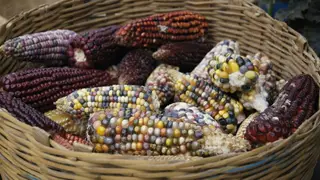
A study of animal bones published in Science Advances in March 2026 suggests that farmers in Mexico’s Tehuacan Valley began cultivating maize during a period of increased rainfall. Andrew Somerville of Iowa State University led the research, which links wetter climatic conditions to the spread of early agriculture. The findings support the theory that favorable environmental conditions enabled the expansion of maize farming in highland regions.
A study published in Science Advances in March 2026 presents new evidence linking early maize cultivation in Mexico’s Tehuacan Valley to periods of increased rainfall. The research, led by Andrew Somerville of Iowa State University, analyzed animal bones from archaeological sites to reconstruct past environmental conditions. The findings indicate that wetter climatic conditions during a specific period may have created favorable soil and water availability, enabling early farmers to transition from foraging to farming. This supports the broader hypothesis that environmental factors played a critical role in the development of agriculture in highland regions of Mesoamerica. The study does not specify exact rainfall measurements or precise dates beyond the publication timeline, but it underscores how climatic shifts could have directly influenced agricultural innovation.
The background to this research lies in long-standing questions about the origins of maize farming, one of the most significant developments in human history. Prior studies have suggested that maize domestication began around 9,000 years ago in southern Mexico, but the timing and conditions of its spread remain debated. This new analysis adds weight to the theory that environmental stability—specifically increased precipitation—may have reduced the risks of crop failure, encouraging farmers to invest in cultivation. The work builds on earlier archaeological and paleoenvironmental research, though it does not reference specific prior studies by name.
Andrew Somerville and his team at Iowa State University are central to this investigation, aiming to clarify the interplay between climate and early agriculture. Their work may influence how scholars interpret the spread of farming in other regions with similar environmental transitions. However, the study does not address how widespread this climatic facilitation was beyond Tehuacan, nor does it confirm whether similar patterns occurred elsewhere. What remains unresolved is whether wetter conditions were a cause or a consequence of agricultural expansion, and how long these favorable conditions persisted.
The findings could reshape how historians and archaeologists understand the environmental triggers behind the Neolithic transition in Mesoamerica. If wetter conditions indeed enabled early maize farming, this may suggest that climate stability was a prerequisite for agricultural investment—potentially influencing how we assess the resilience of ancient food systems. Communities in highland regions today, particularly those dependent on rain-fed agriculture, may find relevance in this research, as it underscores the long-term impact of climate variability on food production. The study may also affect how institutions like UNESCO or national heritage agencies prioritize archaeological sites for preservation, especially in regions vulnerable to climate change. Comparable to the 2018 study linking the rise of Mesopotamian agriculture to riverine flooding patterns, this research highlights how environmental data can reframe our understanding of early human innovation. What to watch for next is whether similar climate-agriculture correlations emerge in other Mesoamerican sites, which could further validate or refine the theory. The broader implication is that climate may have been a silent partner in one of humanity’s most transformative shifts—though the full scope of its role remains to be explored.