Top Smartphones with Longest Battery Life in 2026: OnePlus 15 Leads with 7,300mAh
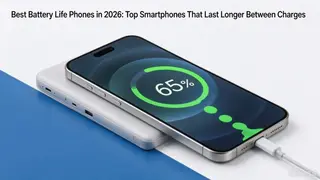
The OnePlus 15 leads in battery performance for 2026 with a 7,300mAh silicon-carbon-enhanced battery, outperforming other flagship models. The OPPO Find X9 Pro offers 7,500mAh capacity, while the Apple iPhone 18 Pro Max and Samsung Galaxy S26 Ultra deliver improved endurance despite lower capacities. Battery longevity is influenced by both hardware advancements and software optimization.
In 2026, the OnePlus 15 leads the market in battery endurance with a 7,300mAh silicon-carbon-enhanced battery, outperforming other flagship models despite not having the highest capacity. The OPPO Find X9 Pro follows closely with a 7,500mAh battery, while the Apple iPhone 18 Pro Max and Samsung Galaxy S26 Ultra deliver improved battery life through software optimization despite smaller 5,000mAh capacities. These advancements are part of a broader industry shift toward larger battery capacities and more efficient power management systems, driven by consumer demand for all-day usability without frequent charging. The rise of silicon-carbon battery technology—highlighted in the OnePlus 15 and OPPO Find X9 Pro—marks a key innovation, offering higher energy density and longer lifespan than traditional lithium-ion batteries. This progress builds on earlier reports from 2025 that predicted a move beyond 5,000mAh as standard, with manufacturers like OPPO and OnePlus pushing the envelope with regional variations in battery specs, such as the 8,000mAh global version of the Find X10. The companies involved—OnePlus, OPPO, Apple, and Samsung—are all investing heavily in both hardware and software to extend battery life while maintaining flagship performance. However, challenges remain: camera performance and thermal management in the OnePlus 15 are noted as weaker than competitors, and regional battery differences complicate consumer choices. What remains unresolved is whether silicon-carbon technology will become standard across brands or remain a premium differentiator, and how long-term durability and environmental impact of these new batteries will be assessed.
The growing emphasis on battery life in 2026 smartphones could significantly influence consumer behavior, particularly among travelers, remote workers, and digital nomads who rely on uninterrupted device use. As battery endurance becomes a primary purchase factor, it may shift market dynamics, favoring brands that balance longevity with performance and design. This trend could pressure manufacturers to prioritize power efficiency over raw processing speed, potentially reshaping product development cycles. A comparable precedent is the 2013 shift toward larger batteries following widespread user frustration with short-lived devices, which eventually led to standardized 3,000mAh+ benchmarks. Today’s advancements may similarly redefine expectations, with users increasingly unwilling to compromise on battery life even for cutting-edge features. However, the impact on secondary markets—such as portable chargers and battery cases—remains uncertain; if flagship devices consistently deliver 30+ hours of use, demand for external power sources could decline. Additionally, regional disparities in battery capacity, like those seen in the OPPO Find X10, may complicate global supply chains and consumer trust. The next key development to watch is whether silicon-carbon technology becomes widely adopted or remains niche, and how regulatory bodies may eventually assess the environmental footprint of these new battery chemistries.