Colts Rejected Trade Offers for Daniel Jones Before Cutting Him
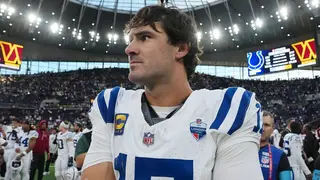
The Indianapolis Colts reportedly turned down trade interest from both the Minnesota Vikings and Baltimore Ravens for quarterback Daniel Jones before releasing him. The decision comes less than nine months after signing Jones to a two-year, $88 million contract with $50 million guaranteed. The move has sparked criticism over the team’s lack of a clear rebuilding strategy.
The Indianapolis Colts reportedly declined trade offers from the Minnesota Vikings and Baltimore Ravens for quarterback Daniel Jones prior to releasing him. This decision follows Jones’s signing just under nine months earlier to a two-year, $88 million contract with $50 million guaranteed. The move has drawn scrutiny due to the significant financial commitment and the lack of a clear long-term plan for the team’s quarterback position. The Colts’ failure to trade Jones despite interest from two NFL teams raises questions about the organization’s strategic direction, particularly in the context of a potential rebuild. The timing of the release—shortly after a major contract extension—has intensified criticism that the team may have misjudged Jones’s value or failed to align his role with broader roster planning.
Jones, a former New York Giants starter, was seen as a potential cornerstone for the Colts’ offense, but his tenure in Indianapolis was brief and underwhelming. The team’s decision to cut him without trading him suggests a lack of internal consensus or a failure to identify a suitable destination. The Vikings and Ravens, both playoff contenders in recent seasons, may have viewed Jones as a viable backup or developmental option, but their interest was not acted upon. The absence of a trade window or clear communication about the team’s intentions has left fans, analysts, and players questioning the front office’s decision-making process. What remains unclear is whether the Colts will pursue a new quarterback via free agency, the draft, or another trade, and how this move will affect their standing in the competitive AFC South.
The Colts’ handling of Daniel Jones could signal deeper instability in their quarterback development and roster management. With Jones’s release, the team may face scrutiny over its long-term planning, particularly in a league where quarterback decisions often define a franchise’s trajectory. The decision to retain a high-priced player only to release him quickly may erode confidence among fans and affect team morale, especially if the organization lacks a clear vision for the future. Comparable cases, such as the New York Jets’ treatment of Sam Darnold or the Washington Commanders’ early exit from the Carson Wentz era, highlight how missteps with high-profile quarterbacks can have lasting consequences on team culture and fan engagement. The broader impact may ripple through the NFL’s free agency and trade markets, where teams may become more cautious about signing or trading for players with large contracts, especially if they are perceived as high-risk. The Colts’ move could also influence how other franchises assess quarterback value and contract security. What to watch for next is whether the team will pivot toward a younger quarterback, either through the draft or a low-cost acquisition, and how quickly they can stabilize their offense. The long-term effect on the franchise’s reputation and player retention could be significant, especially if this decision is seen as part of a larger pattern of inconsistent decision-making.