Ryan Jeffers Stays with Twins on One-Year Deal After Surprising Decision
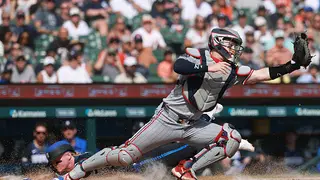
Catcher Ryan Jeffers has agreed to a one-year, $23.15 million contract with the Minnesota Twins, opting to accept their qualifying offer instead of pursuing a longer free-agent deal. This move comes after widespread expectation that he would seek a multi-year contract, with interest reportedly from the Yankees and Red Sox. The signing secures an experienced hitter and defensive presence for the Twins as they continue their offseason roster adjustments.
On November 17, 2026, Minnesota Twins catcher Ryan Jeffers agreed to a one-year, $23.15 million contract by accepting the team’s qualifying offer, surprising analysts who expected him to pursue a multi-year deal. This decision came after the Twins had previously expressed interest in signing him to a long-term contract and had already re-signed starting pitcher Sonny Gray to a two-year, $55 million deal with an opt-out after Year 1. Jeffers, who played in 92 games during the 2026 season, posted a .256/.353/.461 slash line with 14 home runs and 56 RBIs, while also ranking 10th among MLB catchers in Automated Ball-Strike (ABS) success rate at 61.1%. His return secures a proven middle-of-the-order hitter and a reliable defensive presence, especially crucial given that Victor Caratini was the only other returning catcher on the roster. The Twins’ front office, led by general manager Jeremy Zoll, appears to be prioritizing immediate stability while allowing their catching prospects—such as top draft pick Vahn Lackey (No. 32 on Just Baseball’s 2026 Top 100 Prospects), Carson Tinney, Khadim Diaw, Eduardo Tait, and Enrique Jimenez—to develop in the minors.
Jeffers, represented by high-profile agent Scott Boras, is at a pivotal career juncture: he will be 30 at the end of the 2027 season. His decision to take the one-year deal could either elevate his market value if he performs well or diminish it if injuries or poor production occur. With other elite catchers like Adley Rutschman and William Contreras expected to hit free agency in 2027, competition for top-tier backstops may intensify. The Twins, meanwhile, gain flexibility to address other needs—such as bullpen depth, a power hitter, or additional starting pitching—without committing long-term resources. What remains uncertain is whether Jeffers’ short-term commitment signals a broader shift in player strategy or reflects the constraints of a thin free-agent market at the catcher position.
The Jeffers signing could influence how teams approach player retention in a market where top-tier talent is scarce and agent-driven negotiations are increasingly high-stakes. By accepting a one-year deal, Jeffers may be signaling a strategic shift toward performance-based value over guaranteed long-term security—a trend that could resonate with other mid-tier free agents. For the Twins, this move may help rebuild their public image, especially after recent struggles, by showcasing stability and player loyalty. The broader impact may ripple through the minor league system, where the development of catching prospects like Lackey could accelerate if Jeffers remains a short-term presence. A comparable precedent is the 2018 decision by Boston’s Christian Vázquez to accept a one-year deal, which allowed the Red Sox to groom younger talent while maintaining on-field consistency. What may unfold next is whether other teams follow suit, using one-year deals to manage risk and develop depth—especially at premium positions like catcher. The real test will be how Jeffers performs in 2027 and whether his decision becomes a model for future free-agent strategy in a tightening market.