UN Talks on AI Weapons Extend Discussions Without Binding Agreement
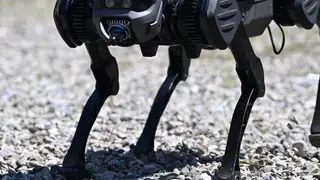
Nations attending U.N.-backed talks in Geneva agreed to extend discussions on lethal autonomous weapons systems for two more years, but failed to commit to binding rules. The outcome reflects ongoing diplomatic challenges amid global conflicts and competition among major military powers. Advocacy groups criticized the decision as a delay, noting that technology is advancing faster than international regulation.
At a week-long U.N.-backed conference in Geneva in November 2026, nations agreed to extend discussions on lethal autonomous weapons systems (LAWS)—commonly referred to as "killer robots"—for two more years, aiming to elaborate on a potential accord by 2028. Despite the extension, no binding rules were adopted, falling short of U.N. Secretary-General António Guterres’ 2026 deadline for launching formal negotiations. The talks occurred under the Convention on Certain Conventional Weapons (CCW), a treaty ratified by 128 countries, where consensus is required for any decision—meaning a single country can block progress. Seven nations—Brazil, Austria, Belgium, Ireland, Mexico, New Zealand, and Panama—had previously proposed launching negotiations on a rulebook to limit or prevent autonomous weapons from making life-or-death decisions without human oversight, but this effort failed. The outcome reflects deep divisions among major military powers, with Russia and the United States accused by advocacy groups of obstructing stronger language. The U.N. high representative for disarmament affairs, Izumi Nakamitsu, described the result as a "significant achievement," though acknowledging it fell short of Guterres’ vision. Activists, including Stop Killer Robots and Lex International, criticized the extension as a delay, warning that technology is advancing faster than diplomacy. The issue has been under discussion since at least 2012, with growing concern over AI-enabled drones already deployed in limited conflict zones, though widespread use remains limited.
The failure to establish binding regulations on autonomous weapons could deepen global security risks, particularly as AI capabilities outpace governance. Civilian populations in conflict zones may face increased danger if machines make targeting decisions without human accountability. The current stalemate may embolden military powers to accelerate development, potentially triggering an AI arms race. This dynamic mirrors earlier concerns around nuclear proliferation, where delayed treaties like the Non-Proliferation Treaty (NPT) were eventually adopted after years of negotiation and escalating tensions. Here, the absence of a treaty could lead to a fragmented regulatory landscape, with some nations adopting stricter rules while others pursue aggressive innovation. The role of advocacy groups like Stop Killer Robots and Lex International may grow, influencing public opinion and pressuring governments. What to watch for next includes whether a new U.N. resolution will be introduced before 2028, whether emerging AI-capable nations will push for inclusion in future talks, and whether private tech firms—already involved in defense AI—will face increased scrutiny. The outcome could shape international law, military doctrine, and humanitarian norms in the decades ahead.