Russia launches massive missile and drone assault across Ukraine, killing two and injuring 83
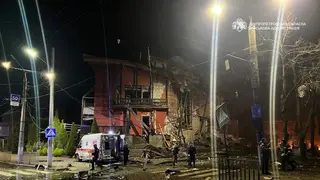
Russia launched 151 missiles and drones, including 87 jet-powered ones, targeting 19 locations across Ukraine on November 21, 2026. The strikes caused widespread damage in Kryvyi Rih, Dnipropetrovsk Oblast, killing a seven-year-old boy and a paramedic, and injuring at least 58 people. Ukrainian air defenses intercepted 117 drones, but debris from downed targets fell in nine locations.
On the night of November 20–21, 2026, Russia launched a large-scale assault on Ukraine, deploying 151 missiles and drones—87 of them jet-powered—targeting 19 locations across the country. The most severe impact was in Kryvyi Rih, Dnipropetrovsk Oblast, where strikes killed a seven-year-old boy and a paramedic, injured at least 58 people, and damaged residential buildings, a hospital, a restaurant, and infrastructure. Ukrainian air defenses intercepted 117 drones, but debris from downed targets fell in nine locations, compounding the danger. The attacks followed a broader pattern of sustained strikes on energy infrastructure and civilian areas, part of an ongoing campaign to degrade Ukraine’s resilience. The Dnipropetrovsk Oblast Governor, Oleksandr Hanzha, confirmed that 28 of the injured remained hospitalized. Similar attacks occurred in Kyiv, where a Podilskyi district strike injured one person and caused fires; in Donetsk, Kharkiv, Kherson, Mykolaiv, Sumy, Vinnytsia, Zaporizhzhia, and Zhytomyr Oblasts, resulting in additional casualties and damage. The use of Iskander-M/KN-23/S-400 ballistic missiles and a high number of jet-powered drones suggests a strategic effort to overwhelm defenses and maximize destruction. The Ukrainian military and regional authorities are focused on damage assessment, medical response, and maintaining air defense readiness. What remains unclear is whether this escalation reflects a shift in Russian strategy or a response to recent Ukrainian advances. The long-term trajectory of the conflict, including potential diplomatic or military escalations, is still uncertain.
The attacks on November 21, 2026, underscore the persistent threat to civilian life and infrastructure in Ukraine, particularly in regions like Dnipropetrovsk and Kharkiv that remain under sustained pressure. The targeting of hospitals, kindergartens, and residential areas could deepen humanitarian strain, potentially affecting mental health, education, and economic stability in affected communities. The high number of jet-powered drones suggests a growing investment in advanced, hard-to-intercept weapons, which may force Ukraine to adapt its air defense systems and increase reliance on Western support. This pattern resembles earlier Russian campaigns in 2022 and 2023, when widespread attacks on energy grids and cities caused mass displacement and infrastructure collapse. The current escalation may signal a renewed effort to erode Ukrainian morale and international resolve, especially as winter approaches and energy needs rise. The international community may respond with further military aid or sanctions, though the effectiveness of such measures remains debated. What could emerge next is a greater push for humanitarian corridors, intensified diplomatic efforts, or a shift in battlefield dynamics. Monitoring the resilience of Ukrainian civil defense, the flow of aid, and shifts in Russian targeting patterns will be crucial in assessing the conflict’s trajectory.