Vodafone Egypt Launches 2025–2026 Sustainability Report with Community Run Event
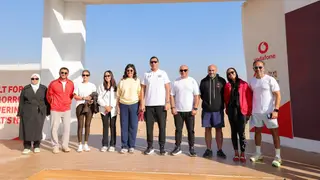
Vodafone Egypt unveiled its annual sustainability report for the 2025–2026 fiscal year, themed 'Building Today What the Future Holds,' through a five-kilometer community run in collaboration with Cairo Runners. The event highlighted achievements in digital inclusion, environmental protection, and workplace safety, featuring interactive stations along the route. Proceeds from ticket sales will support efforts to protect children in the digital space, in partnership with the Mota3en Foundation.
Vodafone Egypt launched its 2025–2026 Sustainability Report on April 1, 2025, during a five-kilometer community run event held at the Giza Pyramids in collaboration with Cairo Runners. The event, themed “Building Today What the Future Holds,” featured interactive stations along the route highlighting key achievements in digital inclusion, environmental protection, and workplace safety. Specific milestones included reducing diesel consumption by 1.5 million liters, achieving 100% clean electricity use, and logging 3.5 million safe work hours without incidents. The event was attended by high-level officials, including Minister of Youth and Sports Ghada Waly and Dr. Nabilah Makram, Chair of the National Alliance for Developmental Civil Society, alongside Vodafone Egypt’s external affairs head Aymen El-Sa’dni. Proceeds from ticket sales—fully directed to the Mota3en Foundation—will support child safety in digital spaces. The run was designed to be inclusive, welcoming participants of all abilities, including athletes with disabilities, reflecting Vodafone’s commitment to social inclusion.
This initiative builds on Vodafone Egypt’s prior sustainability efforts, including its digital financial inclusion programs and environmental initiatives like green energy adoption. The company has consistently emphasized integrating sustainability into its core operations, as seen in its 5G network expansion and women empowerment programs such as the “Muaaki” ambassador initiative, which trained over 3,500 women. The event’s location at the Giza Pyramids symbolizes a long-term vision, linking modern innovation with historical legacy. While the report outlines clear goals and achievements, the long-term impact of the child safety fund and the scalability of the community-run model remain unmeasured. What is not yet known is whether similar events will be replicated in other regions or if the Mota3en Foundation will expand its digital safety programs based on the funding.
The event could strengthen public trust in corporate sustainability efforts, particularly in Egypt’s telecom sector, where digital access and environmental responsibility are growing concerns. By linking physical participation with digital inclusion and environmental action, Vodafone may be setting a precedent for experiential CSR that resonates beyond traditional reporting. The involvement of government officials signals a broader trend of public-private collaboration on social issues, potentially influencing other companies to adopt similar models. Comparable to Unilever’s “Dirt is Good” campaign, this initiative uses physical engagement to communicate sustainability, making abstract goals tangible. However, the real impact will depend on whether the Mota3en Foundation can effectively scale its digital safety programs with the proceeds. What to watch for next is whether other telecom firms in the region adopt similar community-driven reporting formats, and whether the Egyptian government formalizes partnerships with private firms for youth and digital safety initiatives.