Etisalat Egypt Highlights AI Vision and Digital Financial Ecosystem at Cairo ICT 2026
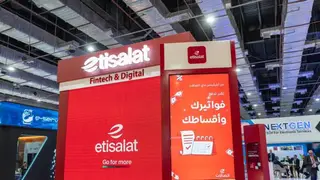
Etisalat Egypt concluded its participation in Cairo ICT 2026 by showcasing its integrated digital financial services and future vision for artificial intelligence. The company presented solutions including etisalat Money, Erada Finance, SuperPay with over 55,000 terminals, and the My etisalat app. Executives participated in panels on AI, fintech innovation, credit evaluation, and digital payments, emphasizing financial inclusion and digital transformation.
Etisalat Egypt concluded its participation in Cairo ICT 2026 by unveiling a comprehensive digital financial ecosystem centered on artificial intelligence, fintech innovation, and financial inclusion. The company highlighted key platforms including etisalat Money—described as the fastest-growing mobile wallet in Egypt during 2026—Erada Finance, which offers SME and Islamic financing solutions, SuperPay with over 55,000 electronic payment terminals, and the My etisalat app, now celebrating a decade of operation with more than half of Etisalat’s customer base using its digital services. These offerings were presented within the broader context of Egypt’s national push toward digital transformation and financial inclusion, aligning with government initiatives to reduce cash dependency and expand access to formal financial systems. The event served as a platform for senior executives—such as Ahmed Yehia (CEO of Financial Technology & Digital Services), Amr Fathi (CEO of IT), and Tarek Nagi (CEO of SuperPay)—to engage in high-level panels on AI, credit evaluation, digital payments, and fintech investment, signaling the company’s strategic pivot toward becoming a full-stack digital financial enabler.
The background to this move lies in Egypt’s evolving digital economy, where mobile money and digital payments are accelerating due to regulatory support and rising smartphone penetration. Etisalat Egypt’s expansion into financial services reflects a broader industry trend among telecom operators globally—leveraging existing customer bases and infrastructure to enter fintech markets. The company’s ambitions include deepening integration across its ecosystem, enhancing user experience through AI-driven personalization, and supporting startups via innovation funding. However, challenges remain: regulatory scrutiny over data privacy, competition from established banks and fintechs like Fawry and Vodafone Cash, and the need for widespread digital literacy. What remains unresolved is how Etisalat Egypt will scale its services beyond urban centers and whether its AI-powered credit evaluation models—discussed in panels—will achieve equitable outcomes across diverse socioeconomic groups.
Etisalat Egypt’s showcase at Cairo ICT 2026 could significantly influence financial inclusion in Egypt, particularly among unbanked populations in rural and underserved areas. By integrating mobile wallets, digital lending, and payment terminals into a single ecosystem, the company may lower barriers to formal finance for millions of Egyptians who previously relied on cash. This model mirrors Kenya’s M-Pesa success, where mobile money revolutionized access to financial services—though Egypt’s larger population and more complex regulatory environment present distinct challenges. The emphasis on AI-driven credit evaluation could improve lending efficiency but raises concerns about algorithmic bias and transparency, especially if user data is used without clear consent. Should Etisalat scale its services effectively, it may pressure traditional banks to innovate faster or risk losing market share. Meanwhile, the company’s partnerships with fintech startups and government bodies could catalyze broader digital transformation across sectors like healthcare and education. What to watch for next: whether Etisalat’s AI systems achieve regulatory approval, how user adoption grows outside major cities, and whether its ecosystem becomes a benchmark for other African telecoms entering fintech.