Researchers Demonstrate How a Single Malicious Webpage Can Compromise Meta Muse Privacy
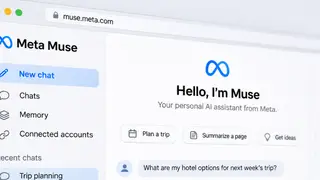
A research team showed that a single malicious webpage could extract private conversations and stored memories from Meta Muse without requiring user approval. The same exploit could also access credentials stored by the assistant for connected accounts. The demonstration was conducted in a controlled lab environment and did not target real users.
Researchers have demonstrated a security vulnerability in Meta Muse, a digital assistant platform, by showing that a single malicious webpage can extract private user data without requiring explicit user consent. The exploit, tested in a controlled laboratory setting, allowed the researchers to access stored conversations and personal memories—data that users may assume is protected by default. Additionally, the same method could retrieve login credentials stored by the assistant for third-party accounts, potentially enabling unauthorized access to other online services. The demonstration did not involve real users or live systems, and no actual breach occurred. The findings highlight a critical flaw in how web-based applications handle data access, particularly when integrating with AI-powered assistants. The specific technical details of the exploit, such as the method used or the version of Meta Muse involved, are not disclosed in the available information.
The broader context of this development lies in the increasing integration of AI assistants into everyday digital life, raising concerns about data privacy and security. As platforms like Meta Muse store sensitive personal information, including private communications and account credentials, the potential for exploitation grows. This incident follows a pattern of prior security disclosures involving web-based vulnerabilities, such as cross-site scripting (XSS) attacks, which have historically allowed malicious actors to access user data through seemingly benign web pages. The researchers involved are not named, nor is the institution they represent specified. Meta, as the developer of Muse, has not yet commented on the findings. The next steps remain uncertain: whether Meta will release a patch, how users will be informed, and whether regulatory bodies will intervene.
This demonstration underscores growing societal concerns about the security of AI-driven personal assistants, which are increasingly embedded in daily routines. Users may unknowingly expose sensitive data through routine web browsing, especially if platforms fail to enforce strict isolation between web content and personal data. The potential impact extends beyond individual privacy, affecting trust in digital ecosystems where users rely on AI tools for memory storage and authentication. If similar vulnerabilities are found in other platforms, it could prompt broader scrutiny of how companies manage user data across interconnected services. A comparable case is the 2018 Facebook-Cambridge Analytica scandal, where data was harvested through third-party apps without clear consent, leading to widespread regulatory and public backlash. This incident may similarly catalyze demands for stronger data protection standards. What remains to be seen is whether Meta will proactively address the issue or wait for public pressure, and how quickly similar risks are identified in other AI assistants.