Dow Plunges into Correction Amid AI Panic and Hawkish Fed Signals
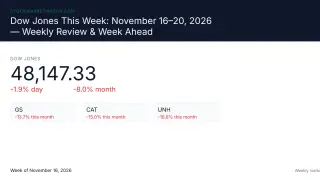
The Dow Jones Industrial Average dropped 8.02% during the week of November 16–20, 2026, entering correction territory after a sharp sell-off driven by Jensen Huang's resignation from Nvidia and a weak performance from Anthropic's IPO. The Federal Reserve, under Chair Kevin Warsh, signaled potential further rate hikes, with FOMC minutes suggesting a 50-basis-point increase in December. Market volatility surged, with the VIX jumping 85.96% to 35.89, while technical indicators showed the Dow was severely oversold.
On November 16–20, 2026, the Dow Jones Industrial Average plummeted 8.02%, closing at 48,147.33 and entering correction territory—defined as a 10% decline from recent highs—marking its steepest weekly drop since the 2020 pandemic sell-off. The sell-off was triggered by two major events: Jensen Huang’s unexpected resignation as CEO of Nvidia, a cornerstone of the AI boom, and the underwhelming debut of Anthropic’s IPO, which undermined confidence in AI-driven growth narratives. The market reacted sharply, with the Dow shedding over 3,400 points in five days. The Federal Reserve, under Chair Kevin Warsh, intensified fears by releasing October FOMC minutes indicating strong support for a 50-basis-point rate hike in December, signaling that current rates (3.75%–4.00%) were insufficient to curb inflation. This dovetailed with a surge in market volatility, as the VIX jumped 85.96% to 35.89, and technical indicators showed the Dow’s RSI at 27—deeply oversold—while price broke below its 200-day moving average. Key Dow 30 constituents like Goldman Sachs, Caterpillar, and UnitedHealth Group contributed heavily to the decline, with Goldman Sachs alone dragging the index down by 1.42% due to its 10.4% weighting.
The broader context reveals a fragile market ecosystem: years of aggressive AI investment, fueled by low interest rates and speculative enthusiasm, had created a bubble vulnerable to leadership changes and macroeconomic shifts. The Fed’s hawkish pivot, driven by persistent inflation and strong labor data, contradicted earlier hopes of a dovish shift, undermining risk assets. Investors, already wary of overvaluation in tech, now faced a dual threat—structural instability in a leading sector and tightening monetary policy. The people involved include Jensen Huang, whose departure disrupted investor confidence in Nvidia’s future; the Fed, which prioritizes inflation control over market stability; and companies like Anthropic, whose IPO failure highlighted the challenges of monetizing AI at scale. What remains unresolved is whether the market’s plunge is a temporary correction or the start of a broader bear market. Upcoming data—especially the PCE Price Index and Q3 GDP revision—could determine if the Fed proceeds with a 50-bp hike, further pressuring equities.
The sharp market downturn could disproportionately affect retail investors who have concentrated holdings in tech and growth stocks, potentially triggering panic selling and long-term portfolio damage. Institutional investors may reassess AI infrastructure investments, slowing capital flows into data centers and related ventures. The broader economy may face reduced consumer spending if wealth effects from falling equity values erode confidence, especially as inflation remains elevated. Financial institutions, particularly those with large exposure to equities or leveraged positions, may face margin calls and tighter credit conditions. A comparable earlier case is the dot-com crash of 2000, when overvaluation in tech stocks collapsed amid rising interest rates and leadership changes, leading to a prolonged bear market. However, unlike then, today’s AI sector is more deeply embedded in real-world applications, which may limit the severity of a downturn if fundamentals eventually reassert themselves. What to watch for next is whether the Fed delays or scales back its rate hike plans in response to market stress, and whether corporate earnings reports in early December can stabilize sentiment. The outcome may depend on whether inflation data continues to show resilience or begins to ease.