15,000-year-old clay figurine bears child's fingerprints, hinting at early teaching practices
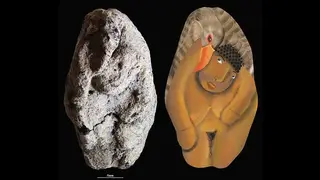
A small clay figurine from the Natufian culture, dating back 15,000 years, bears the fingerprints of a child, likely between 3 and 5 years old. The discovery suggests that children were actively involved in crafting activities, possibly as part of intergenerational teaching. This rare evidence offers a rare glimpse into prehistoric domestic life and early human cultural transmission.
A 15,000-year-old clay figurine discovered in the Levant region, attributed to the Natufian culture, bears the distinct fingerprints of a young child, estimated to be between three and five years old. The figurine, small in size and crafted from local clay, provides rare physical evidence of early human children participating in cultural production. The presence of child-sized fingerprints suggests that the act of shaping clay was not solely the domain of adults but may have involved young individuals in a deliberate, hands-on manner. This finding offers a rare window into domestic life during the Epipaleolithic period, a time when human societies were transitioning from nomadic foraging to more settled, semi-permanent communities.
The Natufian culture, known for its early evidence of sedentism and symbolic expression, is central to understanding the emergence of complex social behaviors in prehistoric human groups. While previous archaeological findings have hinted at symbolic activity and ritual use of figurines, this discovery stands out due to the direct biological trace of a child’s involvement. The fact that a child’s fingerprints were preserved on a crafted object implies that such activities may have been part of intergenerational learning processes, possibly formalized or at least socially recognized. This challenges assumptions that early teaching practices were limited to survival skills, suggesting instead that cultural transmission included artistic and symbolic domains.
The individuals involved in this discovery are likely archaeologists and researchers affiliated with institutions studying the Levant’s prehistoric record, though specific names or organizations are not mentioned in the available material. Their interest lies in understanding how early human societies preserved and passed on knowledge, particularly through material culture. The figurine’s significance lies in its potential to reshape interpretations of childhood roles in ancient societies.
What remains unresolved is whether such child participation was widespread among Natufian communities or an isolated case. Further excavation and analysis of other artifacts from the same period may reveal similar evidence. The next steps could include comparative studies with other prehistoric figurines to determine if child fingerprints appear elsewhere, which would help assess the broader implications for early education and social learning.
The discovery of a child’s fingerprints on a 15,000-year-old clay figurine could influence how society views the origins of education and cultural transmission. It may prompt renewed interest in the role of children in prehistoric societies, challenging the long-held assumption that early human learning was strictly survival-based. This could affect museum exhibitions, educational curricula, and public understanding of human development timelines. Institutions such as anthropology departments, cultural heritage organizations, and science communicators may use this finding to highlight the continuity of teaching practices across millennia. Comparable cases, like the discovery of Neanderthal child remains with signs of care and burial, have similarly reshaped perceptions of ancient empathy and social complexity. This figurine may serve a similar function—redefining the narrative around early childhood agency. The broader impact may extend to how we interpret symbolic behavior in prehistory, potentially influencing funding priorities for archaeological research focused on domestic life and child development. Researchers may look more closely at artifacts from other early cultures for similar traces. What to watch for is whether future discoveries confirm a pattern of child involvement in craftsmanship, which could suggest that teaching through hands-on creation was a foundational aspect of human cultural evolution.