SpaceX Completes Cryogenic Testing on Starship Flight 17 Booster Ahead of 2027 Launch
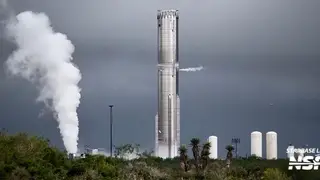
SpaceX is conducting cryogenic proof tests on the Flight 17 Super Heavy Booster (Booster 24) at its Starbase facility in Texas, using liquid nitrogen to simulate extreme cold conditions without using actual propellants. The tests are part of preparations for the upcoming 17th Starship mission, expected to launch in early 2027, following successful testing of the upper stage Ship 44. These tests validate structural integrity before wet dress rehearsals and static fire tests with real fuel.
SpaceX is conducting cryogenic proof tests on the Flight 17 Super Heavy Booster (Booster 24) at its Starbase facility in Texas, using liquid nitrogen to simulate the extreme cold of liquid oxygen and methane propellants without the risks of handling actual fuels. These tests, which began on November 22, 2026, are part of the pre-flight validation process for the 17th Starship mission, currently targeted for early 2027. The upper stage, Ship 44, has already completed its cryogenic testing, and both stages were rolled out to the Massey's Test Site for testing. The tests aim to verify structural integrity and system performance under cryogenic conditions before wet dress rehearsals and static fire tests with real propellants. Flight 15, which launched on November 13, 2026, marked a milestone with the first successful catch of the upper stage by the launch tower’s “chopsticks,” though the booster failed to relight one of its 33 engines and was diverted to an offshore landing zone due to guidance issues. Despite the booster’s failure, the upper stage performed flawlessly, and Elon Musk announced it would be displayed publicly due to its historical significance. Meanwhile, Flight 16 is reportedly slated for December 2026, possibly launching from Kennedy Space Center (KSC) in Florida, though some reports suggest it may launch from Texas instead. SpaceX is also developing infrastructure at Cape Canaveral and a new Starbase city in Louisiana, with the first launch from the latter expected in 2028. The company aims to begin weekly Starship flights in 2027, including a test article for NASA’s Artemis III mission, which will involve rendezvous with Orion in low-Earth orbit. The success of on-orbit refueling remains a critical unresolved challenge for future lunar missions.
The progress of Starship Flight 17 and its testing phase could accelerate the timeline for human spaceflight beyond low-Earth orbit, potentially reshaping NASA’s Artemis program and private space ventures. If SpaceX achieves reliable reusability and weekly launch cadence by 2027, it may reduce launch costs and increase access to space for scientific payloads, commercial entities, and international partners. The successful catch of the upper stage in Flight 15, despite booster failure, demonstrates a key step toward full reusability—similar to how the Space Shuttle’s reusability revolutionized orbital access in the 1980s. However, the continued engine and guidance issues highlight that reliability remains a hurdle. The shift from Texas to Florida for future launches may reflect broader strategic decisions about infrastructure and regulatory coordination. If on-orbit refueling proves viable, it could enable sustained lunar missions and even Mars exploration, altering the balance of power in space among nations and private firms. What remains uncertain is whether SpaceX can maintain its aggressive schedule while ensuring safety and regulatory compliance. The public display of the Flight 15 upper stage may also signal a growing emphasis on space heritage and public engagement, akin to how the Apollo Command Module is preserved today. The next key milestone will be whether Flight 16 or 17 achieves a full successful launch and catch, which could determine the pace of future missions.