Starship Flight 15 Achieves Historic Orbit and First Catch Attempt in 22.5-Hour Mission
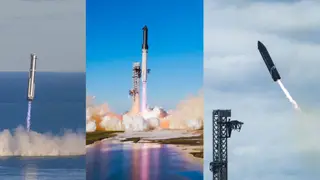
SpaceX's Starship Flight 15 marked the second time the spacecraft reached orbit, ascending to approximately 170 miles (275 km) above Earth. The mission lasted 22.5 hours, during which the upper stage deployed 26 Starlink V3 satellites before deorbiting. The Super Heavy Booster attempted a return and catch at the launch site but was aborted due to low fuel and a guidance system issue, leading to an explosion over the Gulf of America.
Starship Flight 15, launched on November 13 at 4:47 pm CST from Starbase, Texas, marked a pivotal milestone in spaceflight history by achieving orbit for the second time—this time with a 22.5-hour mission, the longest to date. The integrated Starship system, comprising the Super Heavy Booster and the upper stage Ship 42, reached an apogee of approximately 170 miles (275 km) before deploying 26 Starlink V3 satellites during its orbital coast phase. While the upper stage executed a flawless deorbit burn and survived atmospheric reentry, the Super Heavy Booster failed to complete its return and catch attempt due to low fuel reserves and a guidance system issue. The booster attempted a boostback burn but underperformed, leading to an aborted catch over the Gulf of America and subsequent flight termination, resulting in an explosion before splashdown. Despite this, SpaceX successfully caught the upper stage Ship 42 between the launch tower’s chopstick arms at T+22 hours and 32 minutes, marking the first time a Starship upper stage was captured mid-flight. The mission demonstrated significant progress in reusable launch vehicle technology, with the upper stage surviving reentry and being recovered intact. SpaceX plans its next test flight, Flight 16, for December 2026, potentially from NASA’s Kennedy Space Center in Florida, while also advancing plans to expand operations to Louisiana with a $100 billion investment in a new launch complex.
The success of Starship Flight 15, despite the booster's failure, could accelerate the commercialization of reusable heavy-lift launch systems, potentially reshaping access to space for satellite constellations, lunar missions, and future Mars exploration. SpaceX’s ability to catch an upper stage in flight signals a major leap toward rapid reusability, which may reduce launch costs and increase launch cadence—benefits that could disrupt traditional launch providers like ULA and Arianespace. The broader impact on the satellite industry is significant: with Starlink V3 satellites deployed during this mission, SpaceX continues to expand its global broadband network, possibly increasing internet access in remote regions while intensifying competition for orbital slots and spectrum. Comparable to the early development of the Space Shuttle, which promised cost savings but faced delays and high maintenance, Starship’s path may involve similar trade-offs between ambition and reliability. What remains uncertain is whether SpaceX can consistently achieve both booster recovery and upper stage capture, especially under varying mission profiles. The next test flight will be critical in determining if the company can resolve guidance and fuel efficiency issues while maintaining progress toward full reusability.