NFL Confirms Correct Ruling on Parker Washington’s Incomplete Catch in Jaguars-Giants Game
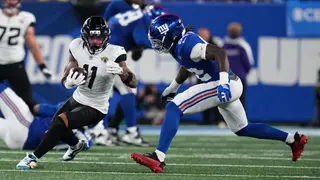
The NFL confirmed that the officials’ decision to rule Jacksonville Jaguars wide receiver Parker Washington’s touchdown catch as incomplete was correct. According to NFL replay official Mark Butterworth, Washington did not maintain control of the ball upon hitting the ground, despite both feet being in bounds. The call preserved a 20-9 lead for the New York Giants, who won 23-18.
On November 22, 2026, during a regular-season NFL matchup between the Jacksonville Jaguars and the New York Giants, wide receiver Parker Washington appeared to secure a touchdown catch in the fourth quarter, with both feet landing in bounds. However, the on-field officials ruled the play incomplete after a review, a decision later confirmed by NFL replay official Mark Butterworth. According to Butterworth, Washington failed to maintain control of the football upon making contact with the ground, despite the feet being in bounds—a key distinction under NFL rules that require a player to retain possession throughout the entire process of the catch. The call preserved a 20-9 lead for the Giants, who ultimately won the game 23-18. The Jaguars, now 7-3, remain in first place in the AFC South, while the Giants improved to 6-3-1 and extended their hold on the NFC East. Washington acknowledged the decision, stating he understood the call and emphasized the team’s focus on moving forward. The play’s outcome had significant momentum implications, as a touchdown would have narrowed the deficit to a single score, potentially altering the game’s trajectory.
The decision underscores the NFL’s continued emphasis on strict enforcement of catch rules, particularly in high-stakes moments. Butterworth’s public confirmation reinforces the league’s commitment to consistency in replay review, even when the outcome is controversial. The Jaguars’ offense, led by quarterback Trevor Lawrence, faced mounting pressure in the final quarter, and the missed opportunity highlighted the fine margins that define NFL outcomes. While the team’s playoff hopes remain intact, the loss to a division rival may fuel scrutiny over officiating consistency. No appeals or further reviews were initiated, and the league has not indicated any changes to the catch rule. The broader implications for player confidence, coaching strategy, and fan perception of officiating remain unresolved, particularly as similar calls could arise in upcoming playoff scenarios.
The ruling on Parker Washington’s catch may influence how teams approach contested plays in tight games, reinforcing the importance of ball security and precise execution. Fans and analysts may scrutinize future calls more closely, especially in high-leverage situations, potentially amplifying debates over consistency in officiating. The NFL’s public validation of the call could bolster trust in the replay system, but it also highlights the subjective nature of catch determinations—particularly when players land in bounds but lose possession. A comparable earlier case occurred in the 2015 NFC Championship Game, when a controversial catch by Packers’ Jordy Nelson was upheld, sparking widespread debate. That moment similarly reshaped narrative momentum and led to long-term scrutiny of replay standards. Moving forward, the league may face increased pressure to clarify or refine catch criteria, especially as technology and fan expectations evolve. What remains to be seen is whether such rulings will prompt rule changes or further standardization in how officials interpret control during the catch process.