NFL Upholds No-Catch Decision on Parker Washington’s Fourth-Quarter Play
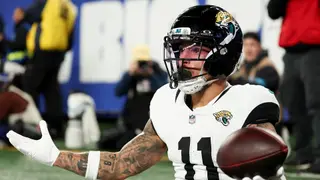
The NFL upheld the no-catch ruling on a fourth-quarter touchdown attempt by Jacksonville Jaguars wide receiver Parker Washington, stating he did not maintain full control of the ball before going out of bounds. The decision came after a challenge by Jaguars coach Liam Coen, who cited a hand switch as the reason for the call. Despite the controversial call, both Washington and quarterback Trevor Lawrence acknowledged the outcome without blaming officials.
On November 22, 2026, during a 23-18 loss to the New York Giants, Jacksonville Jaguars wide receiver Parker Washington made a contested fourth-quarter reception that was initially ruled incomplete. The play became the focal point of a postgame review after Jaguars head coach Liam Coen challenged the call, citing that the ball had switched hands during the catch. The NFL’s replay officials upheld the original no-catch decision, stating that Washington did not maintain full control of the football before going out of bounds. According to vice president of instant replay Mark Butterworth, the receiver failed to establish possession throughout the entire process of the catch, a standard that requires continuous control until the player is fully in bounds or down by contact. Despite the controversy, both Washington and quarterback Trevor Lawrence accepted the call without assigning blame, emphasizing team resilience. CBS rules analyst Gene Steratore, a former NFL official, disagreed, asserting that Washington’s right foot was down and that the ball remained under control. Giants coach John Harbaugh acknowledged the call, noting only that “the ball moved.” The decision reflects the NFL’s ongoing commitment to strict interpretation of the catch rule, particularly in high-stakes moments, and underscores the league’s reliance on replay to enforce consistency, even when it impacts game outcomes.
The ruling could reinforce the NFL’s reputation for tight enforcement of catch rules, potentially affecting player confidence and coaching strategies in critical moments. When borderline plays are consistently called against receivers, it may lead to more conservative route-running and increased pressure on quarterbacks to deliver precise passes. This decision may also influence how teams approach challenges, especially when coaches rely on subjective interpretations like a hand switch. The case echoes earlier controversies, such as the 2015 “No-Call” in the NFC Championship Game, where a similar catch dispute impacted a playoff outcome. While no immediate rule change is expected, the growing visibility of such calls may prompt further debate about consistency and officiating transparency. Fans, analysts, and players may continue to scrutinize replay decisions more closely, especially as the league expands its use of technology. What to watch for next is whether the NFL revises its catch criteria or introduces clearer guidelines to reduce ambiguity in high-pressure situations.