Trump Claims Direct Role in Jensen Huang’s Return to Nvidia for National Security Reasons
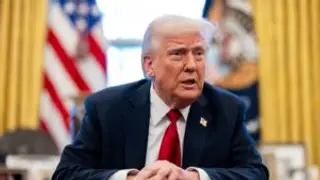
President Donald Trump asserted he personally intervened with Nvidia's board to secure Jensen Huang's return as chief executive, emphasizing the company's critical role in U.S. national security. He cited concerns over the semiconductor industry's strategic importance amid global competition. The claim underscores growing political attention on tech leadership and national defense ties.
President Donald Trump has claimed direct involvement in securing Jensen Huang’s return as chief executive of Nvidia, asserting that his intervention with the company’s board was motivated by national security concerns. The statement centers on the strategic importance of the semiconductor industry, particularly in the context of escalating global competition. While no specific date, location, or documented communication is provided in the available material, the claim positions Trump as having taken a personal role in a high-stakes corporate leadership decision. The assertion highlights the increasing convergence of technology leadership and national defense policy in U.S. political discourse.
The background for this claim lies in the broader strategic emphasis on semiconductor self-reliance, especially amid geopolitical tensions and supply chain vulnerabilities. The U.S. government has previously taken steps to bolster domestic chip manufacturing through legislation like the CHIPS and Science Act, underscoring the sector’s critical role in defense systems, artificial intelligence, and infrastructure. Nvidia’s leadership in AI and high-performance computing makes it a focal point in this national strategy. The company’s board and executive decisions are thus viewed not only as business matters but as matters of national interest.
The individuals involved include Trump, who frames the move as a protective act for national security; Jensen Huang, the CEO whose return is central to the claim; and Nvidia’s board, which would have had final authority over leadership decisions. The motivations of each party remain inferred: Trump may seek to highlight his influence on strategic industries, Huang likely prioritizes company direction, and the board would balance leadership continuity with governance. What remains unresolved is whether Trump’s claim is substantiated, whether the board was indeed influenced, and what formal mechanisms, if any, exist for political figures to intervene in corporate leadership.
Trump’s assertion could signal a broader trend of politicizing tech leadership under the guise of national security, potentially affecting investor confidence and corporate autonomy. If taken seriously, such claims may encourage greater government scrutiny of tech executives, especially in sensitive sectors like semiconductors and AI. This could lead to increased pressure on companies to align with national policy goals, possibly at the expense of independent decision-making. The semiconductor industry, already subject to export controls and supply chain regulations, may face even tighter oversight, affecting global competitiveness. A comparable precedent is the U.S. government’s involvement in the 2018 acquisition of Qualcomm by Broadcom, where national security concerns were raised over foreign ownership of critical tech infrastructure. While that case involved regulatory review rather than direct leadership intervention, it illustrates how strategic industries can become politicized. What to watch for next is whether other political figures or administrations adopt similar narratives, and how the tech sector responds—whether through stronger governance transparency or increased lobbying to insulate leadership from political influence.