ASEAN Faces Strategic Divergence Between Open Digital Economy and U.S.-Led Tech Alliances
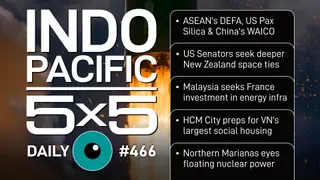
ASEAN is navigating a growing divide between the ASEAN Digital Economy Framework Agreement (DEFA), which promotes open digital integration, and the U.S.-led Pax Silica coalition, which emphasizes security screening of technology partners. While DEFA aims to unlock a $2 trillion digital economy by 2030, Pax Silica focuses on securing supply chains for semiconductors and AI. Indonesia, Malaysia, Cambodia, Laos, and Myanmar have joined China’s WAICO AI initiative, signaling a push for technological sovereignty.
On November 14, 2026, ASEAN member states signed the ASEAN Digital Economy Framework Agreement (DEFA), a landmark initiative championed by Indonesia during its 2023 chairmanship, aiming to unlock a $2 trillion digital economy by 2030. The agreement targets the removal of digital trade barriers across the region’s 700 million people and $4.3 trillion GDP, focusing on cross-border data flows, electronic payments, and consumer protection to empower micro, small, and medium enterprises (MSMEs). Simultaneously, the United States has advanced Pax Silica, a coalition of “trusted partners” focused on securing semiconductor, critical mineral, and AI supply chains through rigorous technology screening. The U.S. is promoting its AI SPARK program to incentivize adoption of American AI infrastructure in public sectors. In contrast, five ASEAN nations—Indonesia, Malaysia, Cambodia, Laos, and Myanmar—joined China’s World AI Cooperation Organization (WAICO) in July 2026 as founding members, alongside 23 other countries. Indonesia, home to the world’s largest nickel reserves, frames this move as a strategy to maintain industrial sovereignty and avoid dependency on any single technological bloc. The divergence between DEFA’s open integration and Pax Silica’s exclusionary security model risks fracturing ASEAN’s unity. The outcome remains uncertain, with no indication of how ASEAN will reconcile these competing visions or whether member states will be forced to choose between economic integration and strategic alignment.
The growing rift between ASEAN’s open digital ambitions and U.S.-led security alliances may reshape regional economic and technological governance. As DEFA seeks to unify ASEAN’s digital markets, Pax Silica’s emphasis on trusted partnerships could marginalize nations unwilling to adopt U.S. tech standards, potentially fragmenting supply chains and limiting access to advanced infrastructure. Meanwhile, WAICO’s rise signals a broader trend toward multipolar technology governance, where middle powers like Indonesia seek autonomy by engaging with non-Western blocs. This could deepen digital decoupling, affecting global tech firms that must navigate divergent regulatory environments. The situation echoes the early 2000s, when the U.S. and EU pursued separate digital trade frameworks, leading to fragmented global standards. Today, ASEAN’s choice may determine whether the region becomes a unified digital market or a battleground for geopolitical tech alignment. What’s next could include ASEAN revising DEFA to accommodate security concerns, or individual members aligning with multiple coalitions—potentially creating hybrid models. The real test will be whether economic incentives can outweigh strategic pressures.