Tom Hiddleston and Hayley Atwell Star in High-Energy Broadway Revival of Much Ado About Nothing
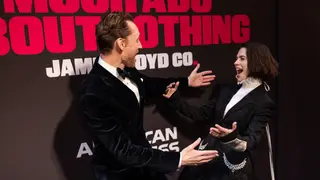
Tom Hiddleston and Hayley Atwell made their Broadway debut together in Jamie Lloyd’s vibrant revival of Much Ado About Nothing at the Winter Garden Theatre. Hiddleston described playing Benedick as a lifelong dream, while Atwell highlighted the modern relevance of Shakespeare’s themes. The production, featuring Mason Alexander Park and other cast members, reimagines the classic as a confetti-filled celebration of love and wit.
On November 24, 2026, Tom Hiddleston and Hayley Atwell made their Broadway debuts together in Jamie Lloyd’s high-energy revival of Much Ado About Nothing at New York’s Winter Garden Theatre. Hiddleston, portraying Benedick, described the role as a lifelong dream fulfilled after three decades, referencing a prior conversation with director Lloyd in 2019 during his Tony-nominated performance in Betrayal. Atwell, playing Beatrice, emphasized the enduring psychological depth of Shakespeare’s characters, noting their modern resonance. The production, featuring Mason Alexander Park as Margaret, Mara Huf, James Phoon, and Gerald Kyd, reimagines the classic comedy as a confetti-filled, dance-filled celebration of love and wit, blending theatrical tradition with contemporary spectacle. The revival marks a significant moment in Broadway’s ongoing effort to attract global celebrity talent to classic works, with Hiddleston and Atwell—both known for major film franchises—bringing substantial audience draw. The production’s success may influence future casting in Shakespearean revivals, particularly those aiming to merge star power with artistic innovation. What remains unclear is how long the production will run, whether it will tour, and how the creative team plans to sustain audience interest beyond the opening-night buzz.
The revival of Much Ado About Nothing with Hiddleston and Atwell could signal a broader trend of reimagining classic theater through high-profile casting and modern staging, potentially reshaping audience expectations for Shakespearean productions. By transforming the play into a vibrant, participatory event with confetti and dance, Jamie Lloyd’s direction may inspire other producers to adopt similarly energetic formats, especially for works aiming to attract younger or non-traditional theatergoers. This approach mirrors earlier successes like the 2014 Hamilton, which redefined how musicals could engage diverse audiences through contemporary style and star power. If this revival proves commercially viable, it may encourage more film and television stars to venture into theater, especially in roles that allow for creative reinterpretation. However, it remains to be seen whether such spectacle-driven adaptations can maintain artistic depth or risk overshadowing the text. The long-term impact on Broadway’s cultural credibility and accessibility—particularly for audiences seeking more traditional interpretations—will depend on how well these productions balance innovation with fidelity to the source material.