Dawn Staley and Geno Auriemma Share Pre-Game Handshake Following Final Four Dispute
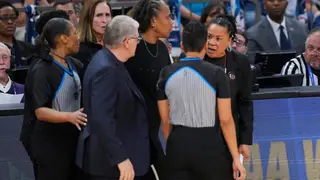
Dawn Staley, head coach of South Carolina women's basketball, exchanged a handshake with Geno Auriemma, coach of UConn, before their matchup on November 24, 2026. The gesture marked a reconciliation following a contentious incident during the previous year's Final Four. The game was the first between the two programs since the disagreement.
On November 24, 2026, Dawn Staley, head coach of the South Carolina women’s basketball team, shared a handshake with Geno Auriemma, head coach of the UConn women’s basketball program, prior to their matchup. This moment marked the first official meeting between the two teams since a highly publicized dispute during the previous year’s Final Four, which had drawn national attention and sparked debate over sportsmanship and coaching conduct. The handshake, a symbolic gesture of reconciliation, occurred in the context of a high-stakes regular-season game, underscoring the significance of the occasion. No further details about the nature of the prior disagreement were provided, but the fact that it prompted a public reconciliation suggests it had substantial impact on the collegiate basketball landscape.
The incident in question, though not described in detail, likely involved a moment of tension or controversy during the 2025 Final Four, a stage where emotions and scrutiny are heightened. As two of the most prominent figures in women’s college basketball, Staley and Auriemma represent programs with deep histories and intense rivalries. Their relationship has long been defined by competitive excellence, but the 2025 incident appears to have strained that dynamic. The fact that their first meeting since the dispute was marked by a gesture of mutual respect suggests a desire to move past the conflict, possibly to preserve the integrity of the sport and set a precedent for conflict resolution. The broader organizations involved—the University of South Carolina and the University of Connecticut—each have vested interests in maintaining positive public images and competitive excellence.
What remains unresolved is the nature of the original dispute and whether it will be formally addressed by the NCAA or other governing bodies. It is also unclear whether this handshake signifies a broader shift in how coaches handle public disagreements or if it is an isolated moment of diplomacy. The next step may involve further public statements or actions from either coach, or the possibility of future matchups being influenced by the evolving relationship.
The handshake between Staley and Auriemma could signal a broader cultural shift in how high-profile athletic conflicts are managed in collegiate sports. As women’s college basketball continues to grow in visibility and commercial value, the conduct of its leaders—especially coaches—comes under increasing public scrutiny. A gesture like this may influence how future disputes are handled, potentially promoting de-escalation over public confrontation. The incident may also impact fan perceptions, with audiences possibly favoring leaders who model sportsmanship, even amid rivalry. Comparable to the 2004 “Malice at the Palace” NBA brawl, where a physical altercation between players and fans led to long-term changes in league conduct policies, this moment could serve as a turning point in how coaches manage conflict in high-pressure environments. While not a physical incident, the emotional and reputational stakes are similarly high. The NCAA and media may begin to emphasize conflict resolution more prominently in athlete and coach development. What to watch for next is whether other coaches follow suit in publicly reconciling past tensions, or if such gestures remain rare exceptions.