Study Reveals Dangerous Feedback Loop Between El Niño and Climate Change
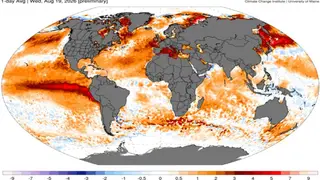
New research published in Science, led by Judith Cole of the University of Michigan, finds that stronger El Niño events are becoming more frequent and are both driven by and contributing to global warming. The team analyzed fossilized coral from the Galápagos Islands to reconstruct sea-surface temperatures over the past millennium, showing that modern El Niños differ significantly from pre-industrial patterns. The study warns that this feedback loop could intensify climate hazards, especially for vulnerable populations.
The research team reconstructed sea-surface temperatures by analyzing fossilized coral deposits from the Galápagos Islands, some dating back more than a millennium. Coral chemistry acts as a natural archive of ocean conditions, similar to how tree rings record historical climate patterns. The data revealed that El Niño variability has increased roughly 37 percent over the past four decades compared with pre-industrial baselines.
James Hansen's recent analysis indicates the current El Niño has already surpassed previous record-strong events, with heat anomalies in the upper Pacific Ocean exceeding the 1997–98 super El Niño. The study's authors note that regions including the Mediterranean, Southwest United States, South Asia, and parts of Africa may face worsening drought and heat conditions if current trends continue.
This feedback loop could accelerate climate hazards more rapidly than previously projected, placing disproportionate burdens on communities in developing regions already vulnerable to extreme weather. Coastal populations, agricultural workers, and those dependent on stable rainfall patterns may face heightened risks of displacement and food insecurity. The findings may also pressure policymakers to reassess adaptation strategies, as infrastructure and living arrangements designed around twentieth-century climate norms could become increasingly inadequate within decades.