Why partial lunar eclipses and other near-misses are worth celebrating
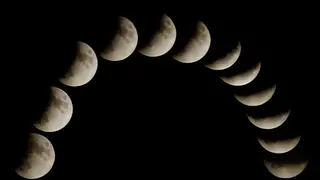
A recent deep partial lunar eclipse covered 96.2% of the moon's surface, leaving a thin sliver outside Earth's umbral shadow and preventing a true blood moon. The author argues that such near-misses, including faint comets and underwhelming meteor showers, keep stargazers' imagination alive. These almost-events offer unique observational experiences beyond the headline celestial phenomena.
The eclipse's near-totality offered observers a rare chance to see Earth's curved umbral shadow traced sharply against the lunar surface, with the bright uneclipsed sliver making the shadow's edge unusually distinct. This geometry lesson unfolded slowly over hours, giving viewers time to appreciate the moon's orbital motion through space.
Lunar eclipse coloration results from atmospheric physics: blue wavelengths scatter away while red and orange light bends into the shadow zone. During totality, the moon is illuminated by the combined glow of every sunrise and sunset occurring simultaneously around Earth's rim—a phenomenon that sounds poetic but is purely mechanical.
This piece could reframe how casual stargazers evaluate celestial events, shifting expectations from dramatic headline moments toward appreciation of subtler phenomena. Readers who witnessed the partial eclipse may feel validated in their experience, while those who skipped it might reconsider future near-misses. The perspective could encourage more consistent sky-watching habits and deeper engagement with astronomy's gradual, observational pleasures rather than waiting solely for rare total events.