Roman Space Telescope set to survey vast cosmic regions with Hubble-like clarity
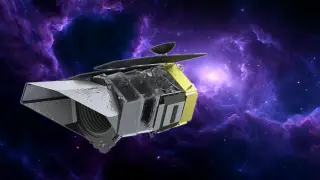
The Nancy Grace Roman Space Telescope, launching soon, will combine Hubble's resolution with a field of view 100 times larger. It aims to survey the entire sky, potentially discovering exoplanets and mapping billions of objects. Its observations will help investigate dark matter and dark energy.
Roman's launch window opens just two days from now, with science operations slated to begin in January 2027. Its 7.9-foot primary mirror matches Hubble's diameter, but its Wide Field Instrument captures images 100 times larger, enabling surveys of the entire sky at Hubble-level resolution—a scale Hubble never achieved in three decades of observing roughly 0.1% of the night sky.
The mission carries two instruments: a Coronagraph for blocking starlight to study exoplanets and surrounding disks, and the Wide Field Instrument for broad surveys. University of Arizona researchers lead teams applying kinematic lensing techniques and cosmological modeling to Roman's galaxy catalogs, targeting dark matter distribution and dark energy's role in cosmic acceleration.
Roman's wide-field surveys could dramatically expand the catalog of known exoplanets and cosmic objects, potentially reshaping public understanding of the universe's composition. Its dark matter and dark energy measurements may influence future physics research priorities and inspire broader interest in space science. The mission's success could also strengthen international collaboration in astrophysics, though its full societal impact will depend on what its observations ultimately reveal.