Roman Space Telescope to deliver panoramic views and massive data streams
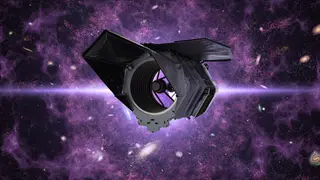
NASA's Nancy Grace Roman Space Telescope, launching August 30, features a 2.4-meter mirror and a 300-megapixel infrared camera that can capture about 100 times more sky per exposure than Hubble or Webb. It will generate roughly 500 terabytes of data annually, comparable to Hubble's total output over 35 years. The agency has selected 118 observation programs to exploit its unique survey capabilities for studies of dark energy, exoplanets, and more.
Roman's mirror, originally built for classified U.S. spy satellite programs, was repurposed for civilian astronomy, giving the telescope its wide field of view. The observatory will operate from the Sun-Earth L2 Lagrange point, the same region of space occupied by the James Webb Space Telescope, roughly one million miles from Earth.
The telescope's survey power stems from its combination of a 2.4-meter mirror and a 300-megapixel infrared camera, enabling it to capture roughly 100 times more sky per exposure than either Hubble or Webb. Its projected annual data output of 500 terabytes matches Hubble's entire 35-year archive. Among the 118 selected programs, researchers will investigate "little red dots"—compact early-universe objects possibly linked to exotic black hole stars—whose apparent disappearance over cosmic time remains unexplained.
This telescope could reshape how astronomers approach large-scale cosmic questions, potentially accelerating discoveries about dark energy, dark matter, and exoplanet populations. The sheer volume of public data may also democratize research, allowing smaller institutions and citizen scientists to participate in analysis. Society could benefit from a broader understanding of the universe's structure and history, though managing and interpreting such massive datasets will require new computational tools and training pipelines.