Rare medieval silver hoard unearthed near Moscow includes previously unknown coin types
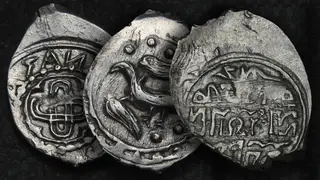
Archaeologists discovered a ceramic jug containing 2,600 silver coins in Kolomna, a historic city southeast of Moscow. The hoard includes over 350 coins of previously unknown varieties and a rare bird-in-flight denga from the reign of Vasily I. Researchers suggest the cache may have been buried by a nobleman who later died during a plague outbreak.
The ceramic jug and its contents were recovered from the historic center of Kolomna, a settlement that ranked second in regional importance during the 14th and 15th centuries. The coins themselves represent a transitional period in Russian monetary history, when dengi were still relatively new currency, having first been struck only decades earlier under the Grand Principality of Moscow.
The dating of the newest coins to the mid-1420s aligns closely with a plague outbreak that struck Russian territories between 1424 and 1427. Researchers believe the owner, likely a high-ranking official or wealthy merchant, may have hidden the cache during this unstable period and never returned to retrieve it, leaving the hoard undisturbed for roughly six centuries.
This discovery could reshape scholarly understanding of medieval Russian minting practices, as the previously unknown coin varieties may force revisions to existing numismatic catalogs and dating frameworks. For the broader public, the hoard offers a tangible connection to a turbulent historical period, potentially sparking renewed interest in medieval Russian history and archaeology. Museums may benefit from increased visitation if the coins are displayed, while researchers could gain valuable insight into trade networks, economic activity, and social stratification in 15th-century Kolomna.