Venezuela Oil Pact Lacks Legitimacy, Adviser Warns
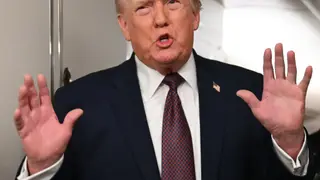
A special adviser to a Venezuelan congressman says the recently announced U.S.-Venezuela oil agreement was negotiated in secrecy and under duress, making it illegitimate and likely illegal. He argues that state-owned PDVSA's chronic mismanagement has driven oil output far below historical levels, leaving reserves nearly worthless without private property rights. The deal's lack of transparency and public debate undermines its credibility.
PDVSA's production collapse spans two distinct eras of leadership. Under Luis Giusti (1994-1998), output soared, but Hugo Chavez's 1999 ascent and the 2002 coup attempt triggered mass purges of industry professionals, replaced with politically loyal staff. Output plunged again after Nicolas Maduro took power in 2013, compounded by a 2017 appointment of a National Guard general with no industry experience to lead the company. Physical capital deterioration and human capital losses have driven equipment breakdowns and accidents.
The adviser's economic analysis centers on depletion rates, which measure how quickly reserves are extracted. Venezuela's rate sits at 0.124% annually, implying 558 years to half-deplete reserves, making most oil virtually worthless in present-value terms. Exxon, by contrast, depletes at roughly 9% per year, reaching half-depletion in 7.4 years. The adviser draws on his experience serving on the UAE's Financial Advisory Council from 2008 to 2014, where he applied similar modeling to Gulf oil reserves.
This deal's legitimacy questions could affect multiple stakeholders. Venezuelan citizens may face continued economic instability if the agreement fails to attract investment or restore production capacity. Global energy markets could see limited supply impact given PDVSA's depressed output, but international investors may hesitate to engage with Venezuelan assets absent clear property rights and transparent negotiations. The dispute over the deal's validity may also complicate U.S. foreign policy objectives in the region, potentially delaying any meaningful recovery of Venezuela's oil sector and prolonging the country's economic crisis.