Grand Canyon flash flood: climate factors likely worsened disaster
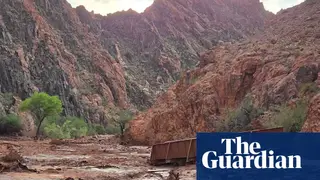
A flash flood in the Grand Canyon killed at least two people and left 15 missing. The flood was likely driven by drought, wildfire scarring, and warming Pacific temperatures. The storm hit a burn scar from a 2025 wildfire, increasing runoff.
The Dragon Bravo wildfire, which consumed roughly 150,000 acres and destroyed the historic Grand Canyon Lodge in July 2025, left slopes barren and prone to rapid runoff. Federal assessments warned that debris-flow risks in Bright Angel Creek could run two to eight times higher than normal, with hazardous rockfall persisting for at least a year. Park officials had reportedly braced for dangerous conditions this summer, and evacuations by helicopter became necessary after floodwaters swallowed bridges and infrastructure. The creek itself turned black as it carried fire debris downstream.
Monsoon season, spanning June through September, routinely brings intense rains to the region, and the canyon's steep rock walls naturally channel water into sudden surges. What made this event distinct was the convergence of multiple stressors—drought-parched ground, fire-scarred terrain, and warmer Pacific temperatures that can intensify storm systems. Researchers note that such "compound extremes," where several contributing factors align, are becoming more frequent as global temperatures climb.
This disaster may reshape how national parks assess visitor safety in fire-affected landscapes, particularly as compound climate extremes become more common. Hikers, lodge staff, and search-and-rescue teams face heightened risks in burn-scarred terrain, and recovery costs could strain park resources. Communities dependent on canyon tourism may see economic ripple effects if access is restricted. The event could also sharpen public awareness that wildfire damage extends beyond the fire itself, influencing how travelers weigh summer trips to arid, fire-prone destinations.