Rare snowstorm hits Atacama Desert, disrupting observatories
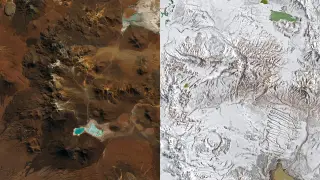
In August 2026, a series of winter storms brought snow and heavy rain to Chile's Atacama Desert, one of the driest regions on Earth. The extreme weather forced several astronomical observatories, including ALMA, to suspend operations. Satellite images captured the snow extending from the Andes toward the Pacific coast.
The storms resulted from a cutoff low that detached from an unusually large trough spanning much of the Southern Hemisphere. This atmospheric setup, combined with coastal moisture, produced precipitation across an exceptionally wide area—from offshore waters and coastline through the desert interior to the Andes. Atmospheric scientist René Garreaud noted that such events occur only a few times per decade at most.
Satellite observations from Landsat 8/9 and Terra documented the snow's progression across the Chajnantor plateau and toward the Pacific. The ALMA observatory placed its antennas in protective survival mode, and other facilities in the coastal region also halted operations. In Taltal, roughly 40 millimeters of rain fell in three days—approximately ten times the city's typical annual total.
This event may signal how atmospheric circulation changes could affect even the most stable climate regions. Observatory disruptions could impact astronomical research schedules and data collection, while flooding and mudflows may threaten local communities and infrastructure. The strengthening El Niño context suggests such extreme precipitation events could become more frequent, potentially reshaping water resource planning and disaster preparedness in northern Chile.