New 20-Meter Sauropod Found in Brazil Reveals Transatlantic Link
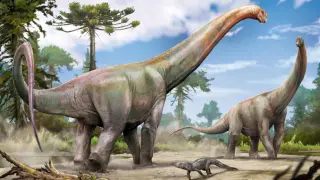
A newly named dinosaur, Dasosaurus tocantinensis, was unearthed at a construction site in Maranhão, Brazil, and lived about 120 million years ago. Its closest relative is known from Spain, indicating that its ancestors traveled through North Africa via ancient land connections. It is the largest dinosaur known from that region.
The fossils were initially misidentified as large prehistoric mammals by archaeologists monitoring the construction site. A researcher later recognized their true age, noting the eight-meter burial depth aligned with a known geological formation from roughly 120 million years ago.
The specimen's preservation is notable, including tail vertebrae, a 1.5-meter femur, ribs, and limb bones. It is now housed in São Luís, and its estimated 20-meter length makes it the largest dinosaur known from Maranhão, dwarfing the 10-meter *Amazonsaurus maranhensis*.
This discovery could reshape paleontological models of Cretaceous dispersal, while also underscoring the value of environmental licensing in construction. Local communities may benefit from increased scientific attention and potential educational outreach. For developers, it highlights the need for thorough archaeological monitoring, as routine earthmoving can unearth significant scientific specimens. The find may also inspire further funding for paleontological research in under-explored Brazilian regions.