Scientists weigh climate factors behind deadly Himalayan flash flood cascade
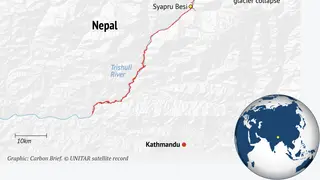
A catastrophic flash flood in late August 2026 killed over 1,300 people across Nepal and Tibet, triggered by a bedrock collapse that set off a multi-hazard cascade. While no formal attribution study has been completed, researchers note that rising temperatures, glacier retreat, and permafrost thaw are increasing the likelihood of such ice-rock avalanches in the region. Prime Minister Balendra Shah described the event as a serious signal of growing climate-related risks in the Himalayas.
The initial seismic reading was later corrected after data revealed the shaking originated from a massive rock and ice avalanche, not an earthquake. The debris fell roughly 2,200 meters, briefly damming the Lhende Khola river before the impromptu lake burst, unleashing the fatal flood wave.
The HiRisk consortium's report details this multi-hazard sequence. While no formal attribution study has been completed, scientists note that warming temperatures, thawing permafrost, and receding glaciers are collectively heightening the probability of such ice-rock collapses in the Himalayas.
The disaster could reshape regional risk management, as downstream communities in Nepal and Tibet face heightened exposure to cascading mountain hazards. Infrastructure, hydropower, and agriculture reliant on these river systems may become increasingly vulnerable to sudden glacial or bedrock failures. This event may spur governments to invest in better monitoring and early-warning networks, though the complex interplay of climate factors makes precise forecasting difficult. The human toll underscores the urgent need for adaptive strategies in high-mountain regions.