Hong Kong positioned as dual gateway for Belt and Road, says Lee
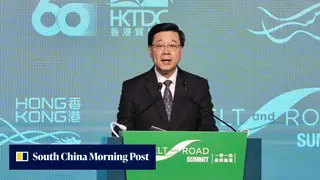
Hong Kong Chief Executive John Lee said the city will continue to serve as a two-way gateway connecting mainland China and global markets under the Belt and Road Initiative. He announced that over 60 agreements and MOUs worth more than US$3 billion would be signed at the summit. Lee highlighted Hong Kong's role in bringing together capital, talent, and businesses, citing Kazakhstan's railway company's listing application as an example.
The summit, held on Wednesday, features over 60 signed agreements and MOUs, with the combined worth of projects and deals surpassing $3 billion. Lee framed the initiative as a forward-looking blueprint rather than a historical map, emphasizing that connectivity and cooperation are vital amidst current geopolitical shifts.
Highlighting the city's strategic function, Lee pointed to a recent application by Kazakhstan's national railway to list on the local exchange as proof of its capital-raising appeal. He also noted a deliberate push into Southeast Asian, Middle Eastern, and Central Asian markets.
This positioning could reinforce Hong Kong's economic relevance amid global decoupling pressures, potentially attracting more international listings and cross-border investments. Businesses in mainland China and partner nations may benefit from streamlined capital access and market entry, though geopolitical tensions could complicate execution. Local financial and legal sectors might see increased activity, while the city's role as a neutral intermediary could be tested by competing international blocs.