New model proposes rapid lunar birth from Earth-Theia collision
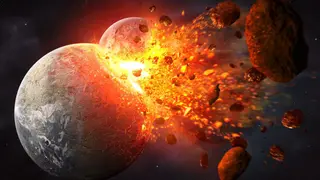
Fresh computer models of the giant impact between early Earth and a Mars-sized body called Theia indicate that the Moon may have condensed from the debris in only a few hours. This timescale is far shorter than earlier estimates, which suggested a much slower accretion process. The findings could reshape our understanding of lunar formation.
The new simulations suggest the Moon's assembly from the debris cloud of the Earth-Theia collision occurred over an extremely brief interval, roughly five hours. This contrasts sharply with prior models that envisioned a much more gradual accumulation of material over months or years. By proposing such a rapid consolidation, the research challenges established timelines for lunar genesis and offers a fresh perspective on how the Earth-Moon system evolved. This finding places the Moon's origin within a much more dynamic and immediate aftermath of planetary impact than previously assumed.
A revised timeline for lunar formation could influence how scientists interpret the early history of the Earth-Moon system, potentially refining models of planetary evolution. This may affect educational narratives in astronomy and deepen public interest in cosmic origins. While the immediate societal impact is likely limited to academic circles, the findings could eventually inform broader understanding of how habitable planets develop, which may inspire future generations of researchers and space enthusiasts.