Mercury's Hidden Wrinkles Reveal Greater Contraction Than Previously Believed
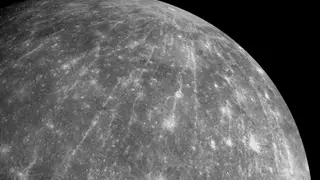
New research indicates that Mercury has contracted 10 to 30 percent more than earlier estimates, based on an analysis of surface roughness that obscured many of the planet's shortening structures. The planet's interior has been cooling and shrinking for billions of years, but the difficulty of observing Mercury from Earth and sending spacecraft there has limited prior measurements. The findings, published in Geophysical Research Letters, offer fresh insight into the planet's geological evolution and internal composition.
Mercury's extreme proximity to the Sun severely hampers direct observation, as intense glare and the difficulty of orbital insertion limit spacecraft visits. Consequently, scientists depend heavily on remote satellite imagery to reconstruct the planet's geological past. The latest investigation specifically examined how billions of years of impact debris and cratering have obscured the planet's contraction ridges, leading to a revised estimate of its radial shrinkage.
Earlier calculations suggested Mercury had contracted by roughly 11 kilometers, but the new analysis proposes a contraction of up to 23 kilometers. This significant upward revision could fundamentally alter models of the planet's thermal evolution. Researchers also suggest that similar hidden contraction might be present on other celestial bodies, such as the Moon and Mars, warranting further investigation.
This refined understanding of Mercury's shrinking could influence how space agencies prioritize future missions and interpret data from upcoming orbital probes. By demonstrating that surface roughness masks geological activity, the research may prompt scientists to re-evaluate existing datasets for other rocky worlds. This could lead to more accurate models of planetary cooling, potentially reshaping public and academic perspectives on how terrestrial planets evolve over billions of years.