Magnetic Signatures in Colombian Volcanic Rocks Push Back Tectonic Collision Timeline
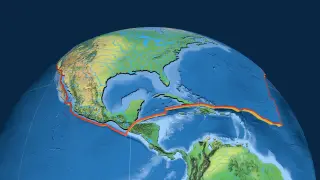
Analysis of magnetic fabrics in late Miocene volcanic rocks from Colombia indicates that major deformation from the collision between Central and South America had already weakened by about 10 million years ago. This suggests the most intense collision occurred earlier than previously believed. The findings revise the geological timeline of the Americas.
The research, appearing in *Earth and Planetary Physics*, focused on the Combia Volcanic Province in central Colombia. By examining the alignment of magnetic minerals within rocks aged 12 to 6 million years, scientists distinguished original volcanic flow structures from later tectonic stress.
Many samples retained their initial magnetic patterns, indicating that major crustal compression had largely finished by that era. This evidence shifts the primary collision phase back to the Oligocene through middle Miocene, providing fresh parameters for reconstructing Andean mountain formation.
This revised timeline could refine geological models of the Andes, potentially influencing how researchers assess regional seismic hazards or mineral resource distribution. While the immediate societal impact is academic, a better grasp of plate interactions may eventually improve long-term forecasting of geological activity in the Americas. It also underscores the value of magnetic analysis in uncovering deep-time Earth processes.