BRICS Summit Exposes Bloc's Inability to Unite on Iran Conflict
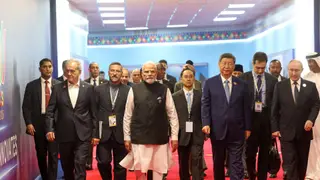
The BRICS summit in New Delhi concluded with a declaration that sidestepped the US-Israel war on Iran, highlighting internal disagreements. The bloc's expansion has introduced conflicting regional interests, such as those of Iran and the UAE, limiting its ability to act cohesively. The episode underscores the difficulty of turning economic weight into geopolitical influence.
The summit's final declaration employed deliberately vague language to preserve unity, following a May foreign ministers' meeting that similarly failed to reach consensus. The core disagreement pitted Iran's demand for explicit condemnation of US and Israeli military actions against the UAE's insistence that Iranian attacks and its own security concerns be acknowledged.
The bloc's expansion to 11 members and 10 partner countries has imported regional disputes directly into its structure. India views BRICS as a tool for strategic autonomy, balancing ties with Washington through the Quad while maintaining engagement with Russia and China. Russia seeks to reduce Western pressure without risking NATO confrontation, while China's pursuit of multipolarity is complicated by these divergent interests.
This episode could erode BRICS' credibility as a genuine counterweight to Western influence, potentially disappointing populations in member states who expect collective action on major conflicts. It may also signal to the US and Israel that no unified opposition exists, possibly reducing diplomatic pressure on their campaign. For smaller nations, the bloc's inability to act cohesively could diminish its appeal as an alternative to Western-led institutions, reinforcing that economic partnerships do not automatically translate into political solidarity.