BepiColombo's transfer module separates, setting up Mercury orbit insertion
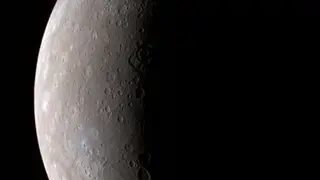
On September 3, 2026, the BepiColombo mission successfully jettisoned its Mercury Transfer Module, marking the start of the final phase of its eight-year journey. The two science orbiters—Mercury Planetary Orbiter and Mercury Magnetospheric Orbiter—are now on course for orbit insertion scheduled for November 21. The orbiters will separate from each other in December, beginning their dedicated science campaign.
The separation on September 3 marked the end of the propulsion phase that carried the stacked spacecraft since its 2018 launch. Engineers confirmed success through Doppler signal detection, with the Mercury Planetary Orbiter's solar panels immediately beginning to charge its batteries. The mission's arrival comes roughly a year behind schedule due to issues with the Solar Electric Power system, which forced a revised trajectory during cruise.
The two orbiters represent distinct engineering approaches: ESA's MPO is a three-axis stabilized, nadir-pointing craft weighing over a ton, while JAXA's Mio will spin at 15 rpm with its axis perpendicular to the Sun. Both will study Mercury's magnetosphere, solar wind interactions, iron core, and magnetic field origins over an initial one-year mission, potentially extendable.
This mission's success could deepen understanding of planetary formation and magnetic field generation, with implications for comparative planetology across the solar system. The international collaboration between ESA and JAXA may strengthen future joint scientific ventures, while the engineering solutions for Mercury's extreme thermal environment could inform designs for other challenging destinations. The public may gain renewed interest in planetary science as the orbiters begin returning data in 2027.