BepiColombo's eight-year cruise ends as orbiters head for Mercury insertion
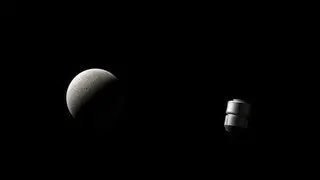
The BepiColombo mission's transfer module separated successfully on September 3, 2026, concluding an eight-year interplanetary cruise. The two ESA-JAXA probes are now bound for Mercury orbit insertion on November 21, with the spacecraft stack separating in December. Science operations are slated to begin in April 2027, focusing on Mercury's oversized core, magnetic field, and surface composition.
The separation on September 3, 2026, closes a trajectory that relied on solar-electric propulsion and nine gravity assists across Earth, Venus, and Mercury. A power limitation on the ion thrusters in 2024 pushed the capture window from late 2025 to late 2026, though the six Mercury flybys still yielded early scientific returns.
The twin orbiters will work in complementary roles—MPO studying the surface and interior while Mio examines the magnetosphere and exosphere. The November 21 capture begins a multi-stage insertion, with Mio separating in December and full science operations starting in April 2027.
This mission could reshape understanding of how rocky planets form and evolve, since Mercury's oversized core and offset magnetic field challenge existing planetary models. The findings may inform comparative planetology across the inner solar system, potentially influencing future mission priorities. For the public, the coordinated two-orbiter approach demonstrates international collaboration in space science, though direct societal impact remains primarily academic until results emerge in 2027.