AI founders confront the risk of their products becoming platform features
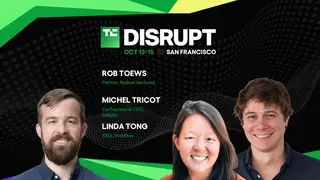
At TechCrunch Disrupt 2026, a session will address how AI startups can survive when OpenAI, Anthropic, or Google release features that overlap with their products. Founders Michel Tricot, Rob Toews, and Linda Tong will discuss strategies for differentiation and lasting value. The conversation focuses on whether startups can own their value proposition as platform capabilities expand.
The session, titled "What Happens When OpenAI Ships Your Roadmap," is scheduled for the Builders Stage at TechCrunch Disrupt 2026, running October 13–15 at Moscone West in San Francisco. The event expects over 10,000 attendees across 250+ sessions. Panelists include Michel Tricot of Airbyte, whose platform serves roughly 7,000 customers including 18% of the Fortune 500; Linda Tong, CEO of Webflow with prior experience at Google, Cisco, and the NFL; and Rob Toews of Radical Ventures. Early registration discounts of up to $200 expire September 25.
The discussion centers on how foundation model companies releasing new capabilities every few months has shifted competitive dynamics. Founders now face the question of whether their product differentiators can survive as platform updates, with defensibility potentially resting on proprietary data, embedded workflows, customer relationships, domain expertise, and trust rather than model sophistication alone.
This discussion reflects a broader uncertainty rippling through the AI startup economy. Founders and their employees may face increased pressure as platform expansions threaten business models, potentially dampening innovation if investors grow cautious about funding ventures vulnerable to absorption. Consumers could benefit from more integrated tools, but may also see fewer independent choices if startups consolidate or exit. The outcome may shape how aggressively new AI companies pursue niche applications versus broad platforms.