BRICS Leaders Seen as Potential Brokers for Iran Conflict
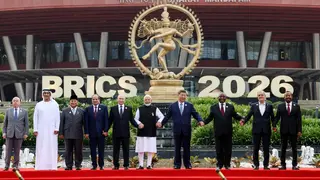
An analysis argues that the U.S. war in Iran has reached a stalemate and that China, India, and Russia, meeting at the BRICS summit, hold the diplomatic leverage to broker a ceasefire. The article notes that while Iran was not on the formal agenda, private discussions likely centered on the conflict. The author contends that Washington's rivals are essential to ending a war the U.S. started but cannot conclude.
The 18th BRICS summit in New Delhi brought together leaders including Modi, Putin, and Xi, with public remarks focused on trade corridors and critiques of the Western-led order. Iran was absent from the formal agenda, but private meetings among the leaders likely addressed the ongoing U.S. military campaign against Tehran.
The conflict began with U.S. and Israeli strikes in June 2025 that set back Iran's nuclear program without ending it. A summer negotiating window closed without a deal, and Trump has suggested the war would conclude after the November midterms. Iran seeks security guarantees and sanctions relief independent of U.S. financial systems—conditions that Russia, China, and India are positioned to provide.
The outcome of this conflict could reshape regional stability and global energy markets, affecting economies worldwide. If BRICS nations broker a ceasefire, it may shift perceptions of diplomatic influence away from Washington, potentially altering alliance structures. Conversely, failure could prolong the war, with humanitarian and economic consequences for the Middle East and beyond. The resolution may depend less on U.S. military power and more on the leverage of rival states, which could influence how future international crises are managed.