Unanswerable questions can still drive scientific progress
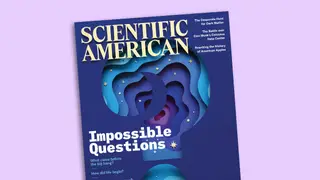
Scientific American's October issue explores questions that may never be resolved. The editors argue that such open-ended inquiries often lead to serendipitous discoveries, citing examples like GLP-1 drugs and alchemy's contributions to chemistry. The value lies in the journey, not just the answer.
The October special report frames "unsolvable" questions as engines of indirect discovery. Historical examples show that dead-end pursuits—like alchemy’s quest for gold—yielded practical tools such as distillation, while the ancient geometric problem of squaring the circle eventually produced transcendental number theory. Modern cases follow the same arc: GLP-1 drugs emerged from studying Gila monster metabolism, and consciousness research has improved anesthesia safety.
The editors emphasize that open-ended inquiry often demands novel instruments and experimental approaches. Dark matter searches have driven detector sensitivity advances, and psychedelic research, born from probing consciousness, has revealed therapeutic potential for depression and PTSD. The value, they argue, lies not in final answers but in the unforeseen pathways opened along the way.
This framing may shift public perception of science funding and research priorities. If unanswerable questions are seen as valuable despite lacking immediate payoff, policymakers and donors could become more tolerant of exploratory, high-risk projects. Society might benefit from serendipitous innovations in medicine and technology, though expectations would need recalibration—progress may come slowly and unpredictably, requiring patience from taxpayers and institutions alike.